
Landscape Lighting Installation
Good landscape lighting does not try to replicate daylight. It picks out the details worth seeing after dark, creates depth where there was flat space, and turns a yard you leave at sunset into one you actually spend time in after dark.
What Landscape Lighting Involves
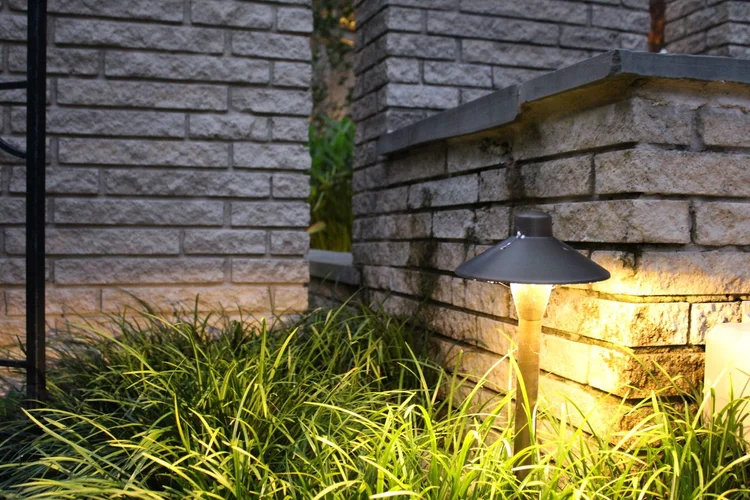
Landscape lighting done well is almost invisible as a system. You notice the lit tree, the illuminated garden bed, the softly glowing path. You do not notice the fixtures, the wire runs, or the transformer. Getting to that result requires thinking about the landscape itself first and the lighting second, working through which elements are worth highlighting, which benefit from being left in shadow, and how the lit and unlit areas work together to create a yard that has depth and dimension after dark rather than a collection of bright spots surrounded by darkness.
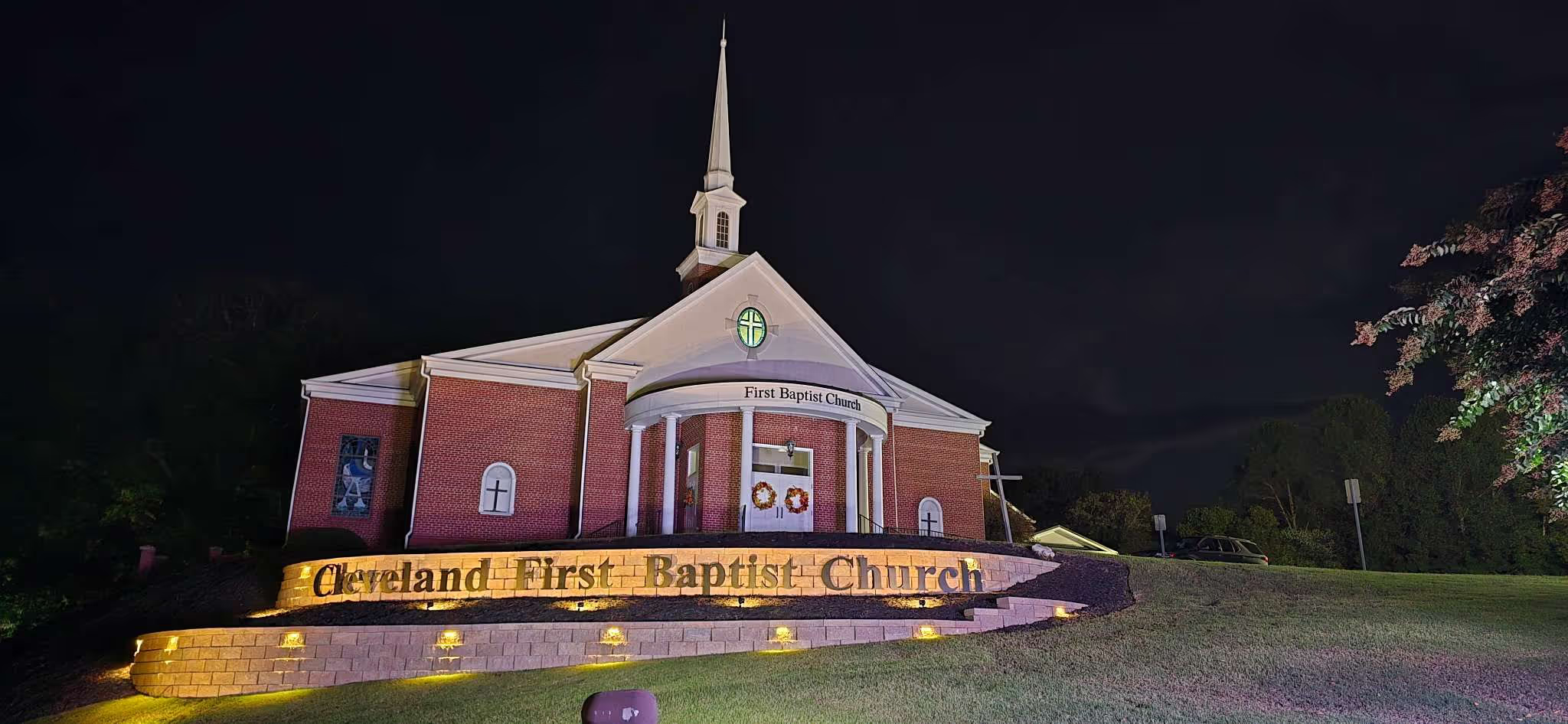
Rooted designs landscape lighting around the specific plants, trees, hardscape features, and spaces in your yard rather than a standard fixture package. We work through what each zone of the yard needs to feel like at night, where uplighting draws the eye upward into tree canopies, where path lighting defines movement without overpowering the surrounding plantings, and where accent lighting picks out the texture of a stone wall or garden feature that disappears after dark without it. Every fixture placement is a decision about what the finished yard should look and feel like, not just where there is a convenient place to put a stake in the ground.

An Informational Guide to Landscape Lighting
Less light is almost always better. The most common mistake in landscape lighting is over-lighting. A yard where every plant, every path, and every feature is lit at the same intensity has no depth, no shadow, and no visual hierarchy. The eye has nowhere to rest and nothing to be drawn toward. Restraint in how many features are lit and how brightly they are lit is what separates landscape lighting that feels designed from landscape lighting that just feels busy.
Uplighting and downlighting do different things. Uplighting places a fixture at the base of a tree, wall, or plant and directs light upward, creating drama and drawing the eye toward height and structure. Downlighting mimics natural light falling from above, whether from a fixture mounted in a tree canopy to create a moonlighting effect or from an eave or pergola overhead. Both have their place in a well-designed landscape lighting plan and the best plans use both rather than defaulting to one approach throughout.
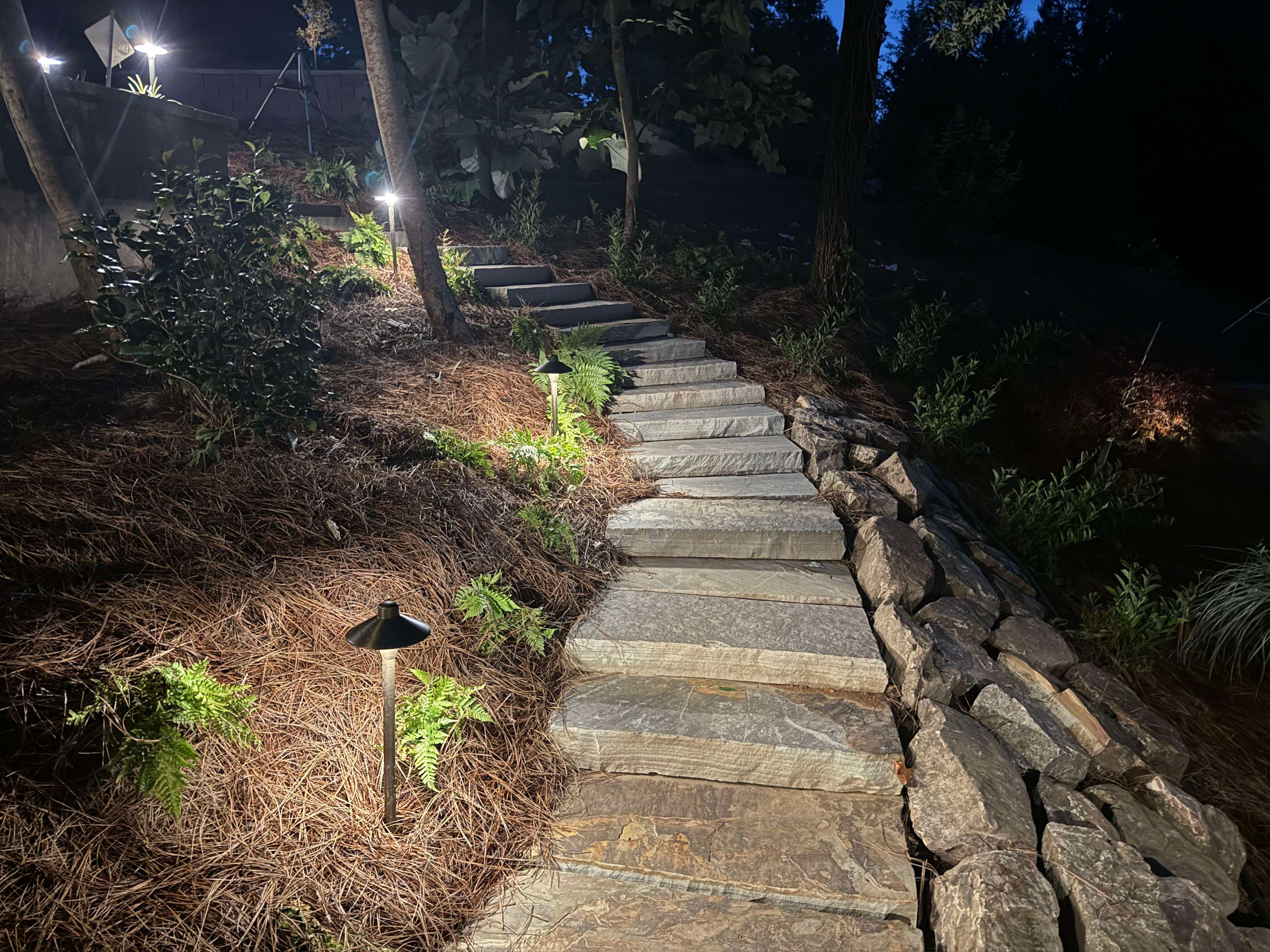
Path lighting is functional and aesthetic. Path lights define movement through a yard and provide enough light to navigate safely after dark. They should be spaced and aimed to illuminate the path itself without creating a runway of evenly spaced glowing fixtures that draws more attention to themselves than to the surrounding landscape. The goal is to feel guided, not directed.
Trees are the highest-value lighting opportunity in most yards. A well-lit mature tree anchors a nighttime landscape the way it anchors a daytime one. Uplighting from below reveals branch structure and canopy texture that is invisible after dark without it. Moonlighting from a fixture placed high in the canopy casts soft, natural-feeling light downward onto the ground below. Both techniques make a significant visual impact relative to the number of fixtures required.
Seasonal changes affect how the system performs. A lighting plan designed around a tree in full summer leaf will look different in winter when the canopy is bare. Deciduous trees let more light through in winter, which can create hotspots on surfaces behind them that were softened by foliage in summer. A well-designed system accounts for how the landscape changes through the year, not just how it looks at installation.
Expansion and adjustment over time. Landscapes grow and change, and a lighting system should be able to grow and change with them. Low-voltage systems are relatively easy to expand as new plantings mature and new features are added. Rooted sizes transformers and wire runs with future expansion in mind so adding to the system later does not require starting over.
A Yard Worth Spending Time In After Dark
Most yards go dark at sunset and stay that way. The same space that feels inviting and well-designed during the day becomes something you look at through a window at night rather than something you are in. Landscape lighting done well closes that gap. It extends the hours your outdoor space is actually usable, makes the design work you invested in visible after dark, and changes how the yard feels from inside the house as much as from outside in it.
Rooted designs every landscape lighting plan around the specific character of your yard, the plants and features worth highlighting, and the atmosphere you want the space to have after the sun goes down. We treat shadow as a design element as deliberately as we treat light, because what is left dark is just as important as what is illuminated. The result is a yard that looks considered at night, draws you outside after dinner, and makes the outdoor space you invested in work for more hours of the day than it did before.
Ready to Transform Your Outdoor Space? Let’s Talk.
Customer Testimonials
Hear from some of our 100+ 5.0 Star Google Reviews!
Anne J.
Jerry and his team where easy to work with. They completed the job ahead of schedule and under budget. The new wall is as attractive as it is practical. Thank you and hopefully we can do another project in future!
Wayne M.
Lynn V.
Kay W.
Reb W.
FAQs
We work with path lights, spotlights, floodlights, uplights, downlights, and accent lights. Each serves a different purpose. Path and step lights handle safety and navigation. Uplighting draws attention to trees, columns, or architectural features by casting light upward. Downlighting works from above for a more natural, moonlit effect over seating areas or garden beds. Accent and spotlights are used to highlight specific elements you want to feature. A well-designed system typically combines several of these rather than relying on one type throughout the property.
LED is the standard we recommend for almost every application. The fixtures use significantly less energy than halogen or incandescent options, and quality LED fixtures are rated for 15,000 to 50,000 hours of use, meaning years of operation with minimal maintenance. They also hold up well against the weather and are available in a range of color temperatures to match the warmth or crispness you want for a given space. The energy savings alone typically make LED the more cost-effective choice over time even when the upfront cost is slightly higher.
Yes. We can set up systems that connect to smart home platforms, allowing you to control your lighting remotely through a smartphone app, set schedules, and automate based on sunset and sunrise times. Motion sensors can also be incorporated for security-focused zones. The level of automation is entirely up to you. Some clients want full smart control, others prefer a simple timer setup. We design around how you actually want to use the system.
We start by walking the property and understanding what you want the space to look and feel like after dark. That means looking at what features are worth highlighting, where safety lighting is needed, how the home's architecture factors in, and what the view looks like from inside the house looking out. From there we develop a fixture plan that balances those goals without over-lighting, which is just as much a problem as under-lighting. Glare, light spill onto neighboring properties, and visual clutter are all things we design against from the start.
Landscape lighting is relatively low-maintenance, especially with LED fixtures, but it does require periodic attention. We recommend checking the system seasonally for any fixtures that have shifted, been damaged, or are obscured by plant growth. Lenses should be cleaned occasionally and wiring connections inspected. If something stops working, we offer diagnostic service to identify and resolve the issue. Staying on top of minor maintenance keeps the system performing the way it was designed to for years.
The Rooted Process
Every project is different, but our process is consistent. Here is exactly what to expect, from your first call to the day you enjoy your finished space.
.avif)
Consultation
We Come to You
Before anything is designed or priced, we walk the property with you. We look at the site conditions, talk through what is not working, and listen to how you want the finished space to look and feel. Everything that shapes the design starts here.
Design & Proposal
See It Before We Start
Using what we gathered on site, we put together a written proposal with a clear scope, materials, and cost specific to your project. For more complex installs, this includes a 3-D rendering so you can see the finished space before we break ground. Everything is agreed upon before any work begins.
comp.jpg)
Site Prep, Build, & Installation
The Work that Makes it Last
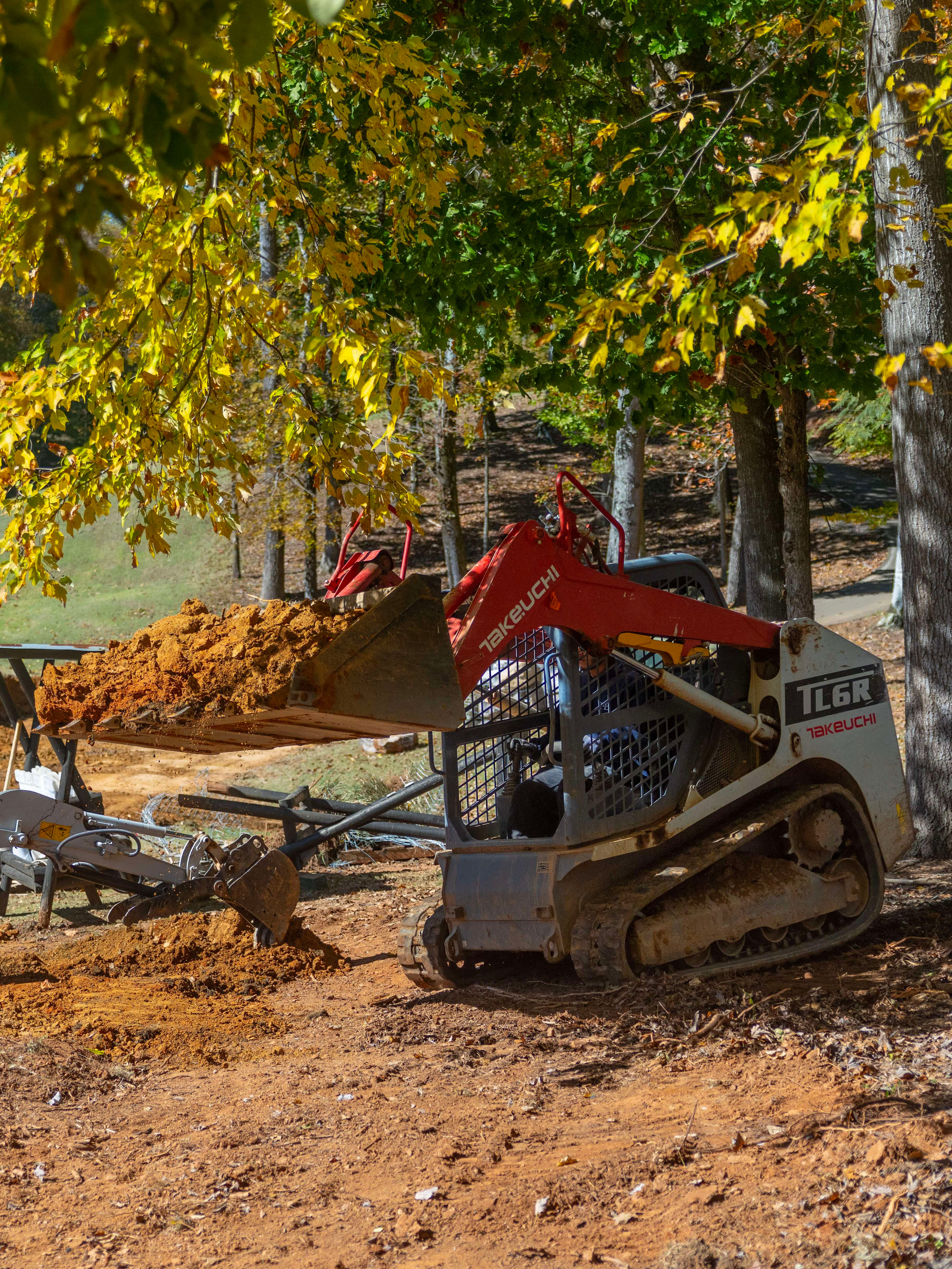
With the design approved and every detail documented, we get to work. Whether that is hardscape construction, planting, drainage, lighting, or a combination of all of them, the installation follows the plan precisely so the finished result matches what you approved.
Final Walkthrough
We Don’t Leave Until You Love It
Once the project is complete, we walk it with you. We cover what was built, how it was done, and what to expect from it over time. You leave the walkthrough confident in what you have and clear on how to care for it going forward.

Let's Build SomethingYou’ll Love
Share your vision and we'll handle the rest.