
Grading in Gainesville, GA
Before anything else can be designed or built, the ground has to be right. Proper grading controls where water goes, creates usable flat space, and sets up every other element of your outdoor project to perform the way it should.
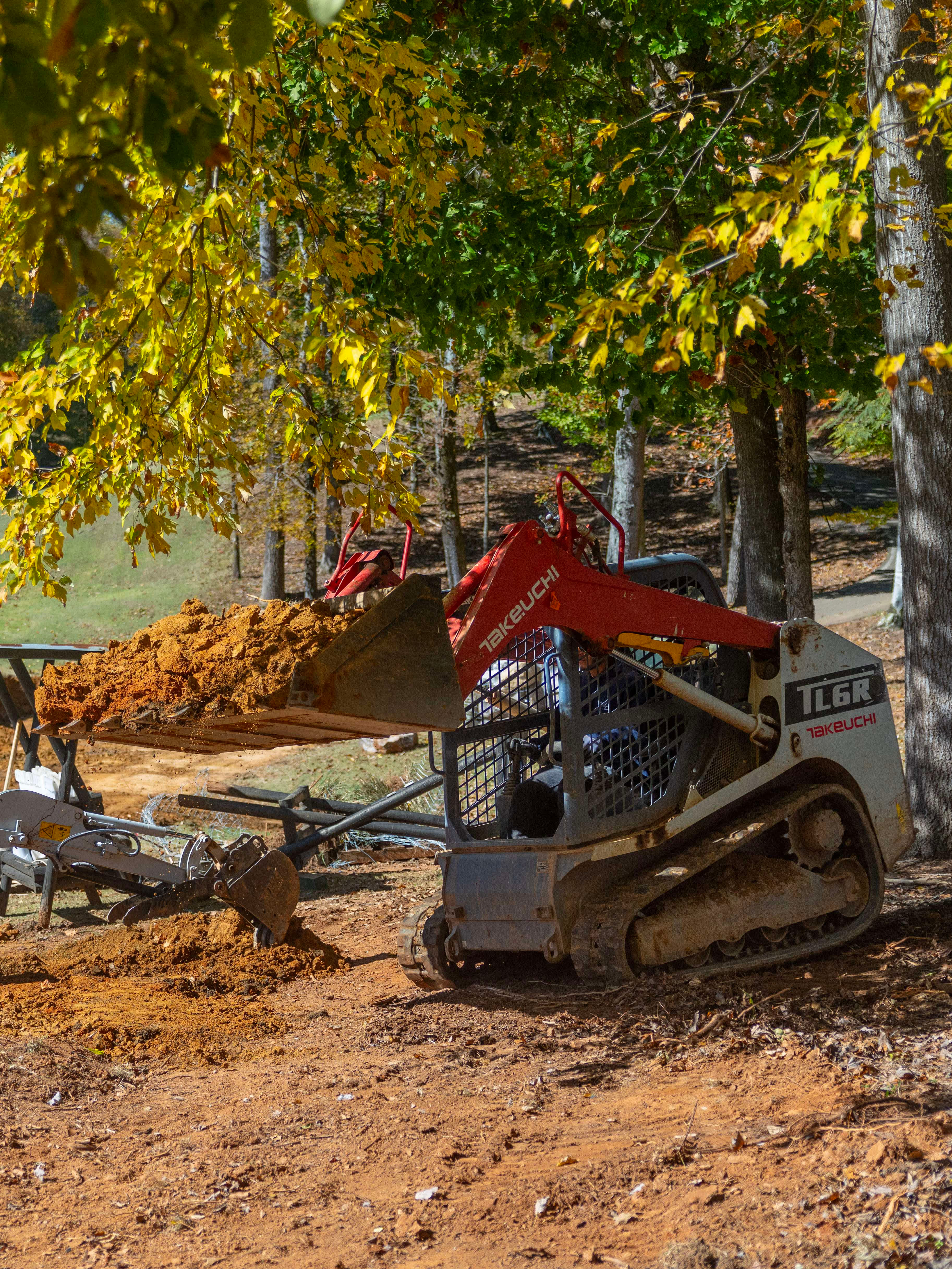
What Grading and Earthwork Involves
Most yard drainage problems are not random. They are the result of ground that was never properly graded after construction, settled unevenly over time, or was shaped around the house without accounting for where water would go during a heavy Georgia rain. The symptoms show up as standing water near the foundation, soggy low spots that never fully dry out, erosion on slopes, and hardscape that shifts or heaves because the ground beneath it is not stable.
Rooted approaches grading as the foundational step it actually is. Whether the work is preparing a site for a new hardscape installation, correcting drainage problems that have developed over time, or reshaping a yard to create usable space where there was none, every grading project starts with understanding how water currently moves across the property and where it needs to go instead. The earthwork follows from that assessment rather than from a general idea of what looks level.
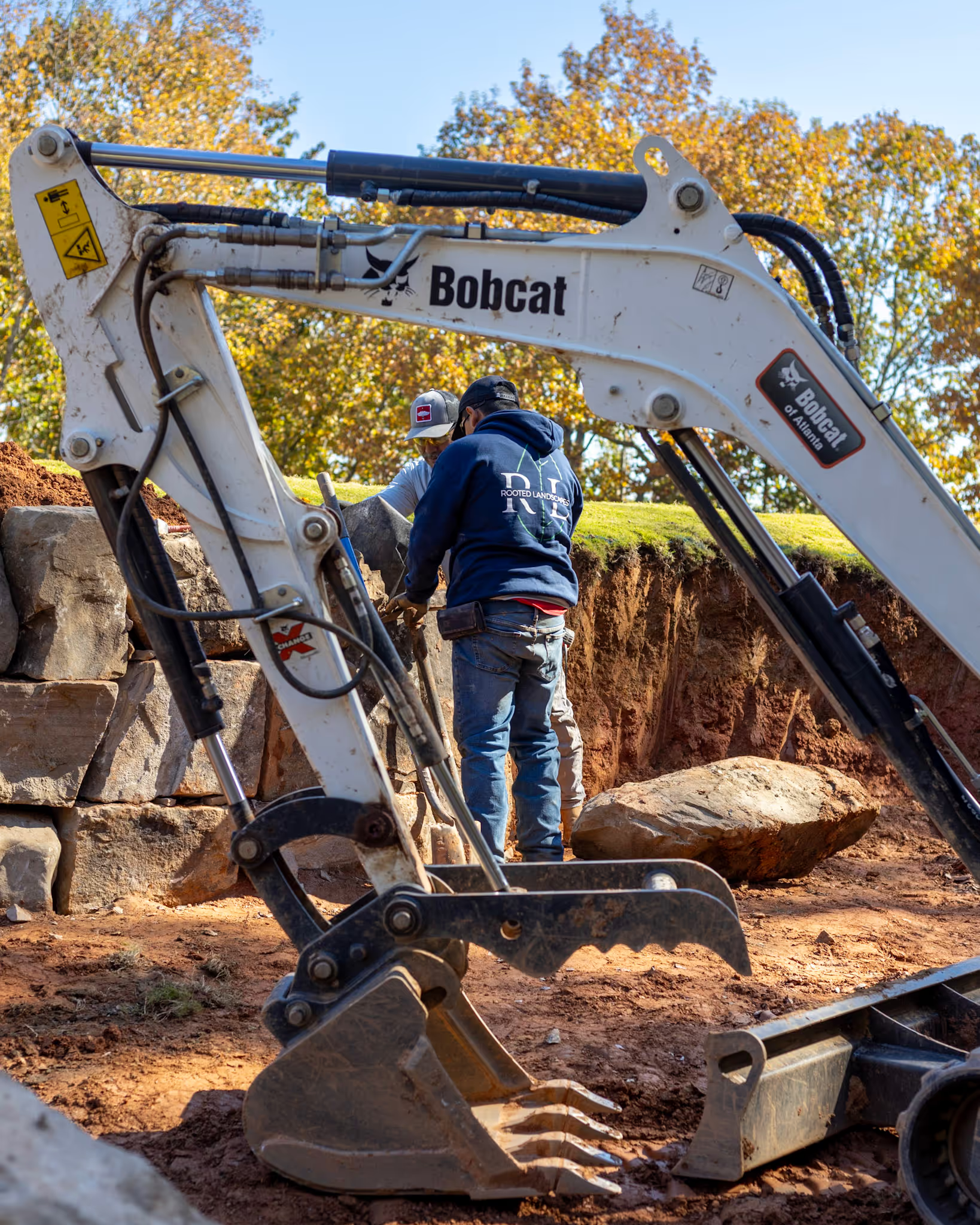
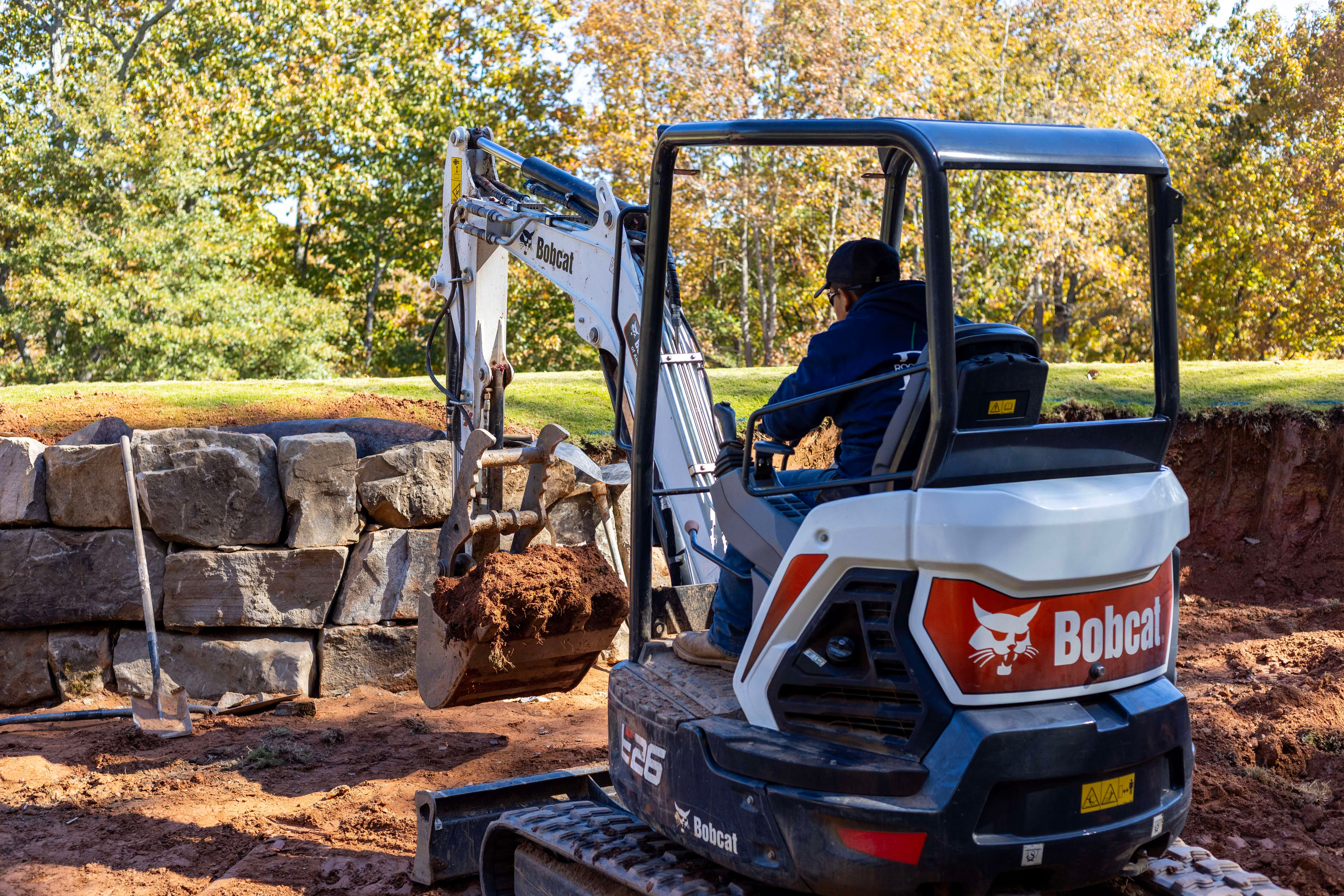
An Informational Guide to Grading and Earthwork
Grading is one of the least visible parts of an outdoor project and one of the most consequential. Understanding how it works helps you recognize when it needs to be part of your project scope even if it was not on your original list.
Grading and drainage are the same conversation. Every grading decision is a drainage decision. The slope of the ground, the direction it pitches, and where it transitions from one elevation to another all determine where water collects, where it moves, and where it ends up. Grading that does not account for drainage from the start tends to solve one problem while creating another somewhere else on the property.
Positive grade away from the foundation is non-negotiable. The ground immediately surrounding your home should slope away from the foundation in every direction. When it does not, water sits against the foundation during and after rain events. Over time that leads to basement moisture, foundation cracking, and landscaping that struggles because the soil never properly drains. Correcting negative grade near a foundation is one of the highest-value grading projects a homeowner can do.
Settling is normal, neglecting it is not. New construction sites settle unevenly in the years after a home is built as disturbed soil compacts and stabilizes. Low spots develop, drainage patterns shift, and areas that drained fine initially start to hold water. Periodic grading to correct settling is a normal part of maintaining a yard, not a sign that something went wrong.
Topsoil matters after grading. Grading work exposes and moves subsoil, which is typically lower in organic matter and less hospitable to grass and plants than the topsoil that was on the surface. After significant earthwork, bringing in quality topsoil and preparing the surface properly before seeding or sodding makes the difference between a lawn that establishes quickly and one that struggles for seasons.
Level Ground Does Not Happen by Accident
A yard that drains well, sits stable, and holds its shape through Georgia's wet seasons is not the default condition of most residential properties. It is the result of deliberate decisions about where the ground sits, where it pitches, and how water moves through it. When those decisions are made correctly at the beginning of a project, everything built on top of them performs better and lasts longer. When they are skipped or treated as secondary, the problems show up later in ways that are more expensive to fix than they would have been to prevent.
Rooted treats grading as the starting point for every outdoor project it touches, not as an afterthought once the design is already set. We assess how your property currently drains, identify where the problems are and why they exist, and shape the ground to support whatever comes next, whether that is a new patio, a planting plan, a retaining wall, or simply a yard that stops flooding every time it rains.
.avif)
Ready to Transform Your Outdoor Space? Let’s Talk.
Customer Testimonials
Hear from some of our 100+ 5.0 Star Google Reviews!
Anne J.
Jerry and his team where easy to work with. They completed the job ahead of schedule and under budget. The new wall is as attractive as it is practical. Thank you and hopefully we can do another project in future!
Wayne M.
Lynn V.
Kay W.
Reb W.
FAQs
The most common signs are standing water after rain, water pooling near your home's foundation, visible erosion on slopes, and noticeably uneven terrain that makes the yard difficult to use or maintain. Foundation drainage is worth paying particular attention to. Water that consistently pools against a foundation creates long-term risk that grading can address before it becomes a structural problem. If you are seeing any of these issues regularly, a grading assessment is a reasonable next step.
Grading reshapes the land by adjusting slope and contour to direct water where it should go and create a stable, level surface where needed. Depending on the project, that might mean rough grading to move significant amounts of soil and reshape the land, finish grading to smooth and fine-tune the surface, or contour grading that works with the natural lay of the land to manage water flow more subtly. We use the approach that fits your property's specific conditions rather than applying the same technique to every job.
Yes, and it often makes sense to do so. Grading pairs naturally with sod installation, drainage system work, retaining walls, and hardscape projects because the ground needs to be right before anything else goes on top of it. If you are planning a larger landscape project, addressing grading first sets everything else up for better long-term performance.
It depends on the scope of the work. We assess what is in place before we start and take care to protect existing plantings and features where possible. For more significant grade changes, some adjustments to existing landscaping may be unavoidable. We walk you through what to expect before any work begins so there are no surprises, and we locate underground utilities prior to breaking ground.
Any time soil is disturbed, erosion control becomes part of the job. We use silt fences, erosion control blankets, and other measures to prevent sediment runoff during and after grading. On sloped sites or projects near drainage features, this is especially important. Once grading is complete, establishing ground cover through sod, seed, or planting is typically the next step to stabilize the surface for the long term.
The Rooted Process
Every project is different, but our process is consistent. Here is exactly what to expect, from your first call to the day you enjoy your finished space.
Consultation
We Come to You
Before anything is designed or priced, we walk the property with you. We look at the site conditions, talk through what is not working, and listen to how you want the finished space to look and feel. Everything that shapes the design starts here.
Design & Proposal
See It Before We Start
Using what we gathered on site, we put together a written proposal with a clear scope, materials, and cost specific to your project. For more complex installs, this includes a 3-D rendering so you can see the finished space before we break ground. Everything is agreed upon before any work begins.
comp.jpg)
Site Prep, Build, & Installation
The Work that Makes it Last
With the design approved and every detail documented, we get to work. Whether that is hardscape construction, planting, drainage, lighting, or a combination of all of them, the installation follows the plan precisely so the finished result matches what you approved.
Final Walkthrough
We Don’t Leave Until You Love It
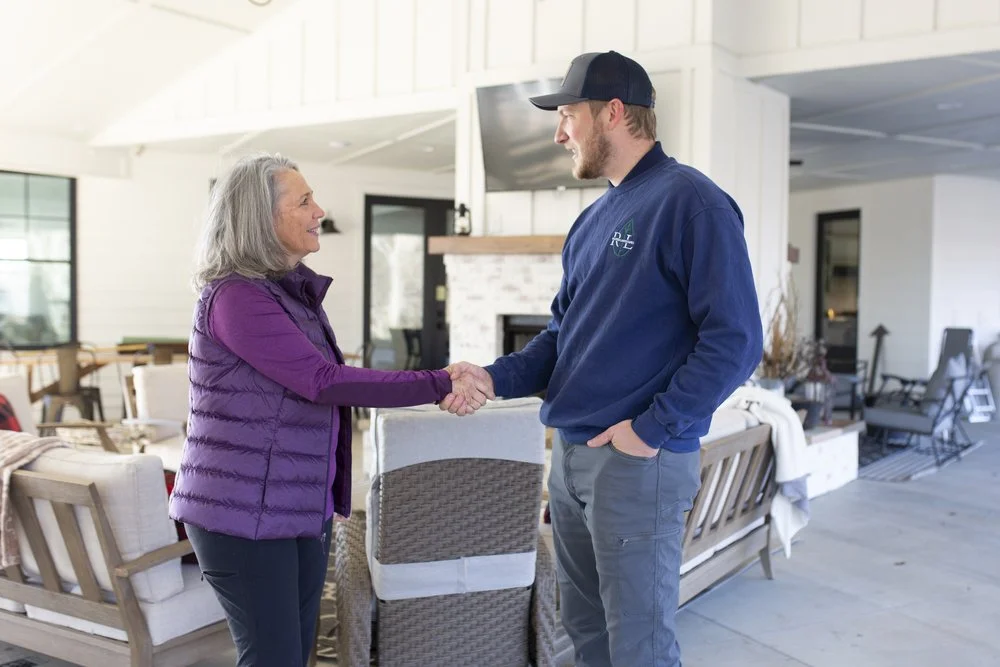
Once the project is complete, we walk it with you. We cover what was built, how it was done, and what to expect from it over time. You leave the walkthrough confident in what you have and clear on how to care for it going forward.
Let's Build SomethingYou’ll Love
Share your vision and we'll handle the rest.