
Drainage & Erosion Control
Water that has nowhere to go finds its own way, and it rarely goes where you want it to. A properly designed drainage solution controls where water moves across your property, protects your foundation, and keeps your yard functional after a hard Georgia rain.
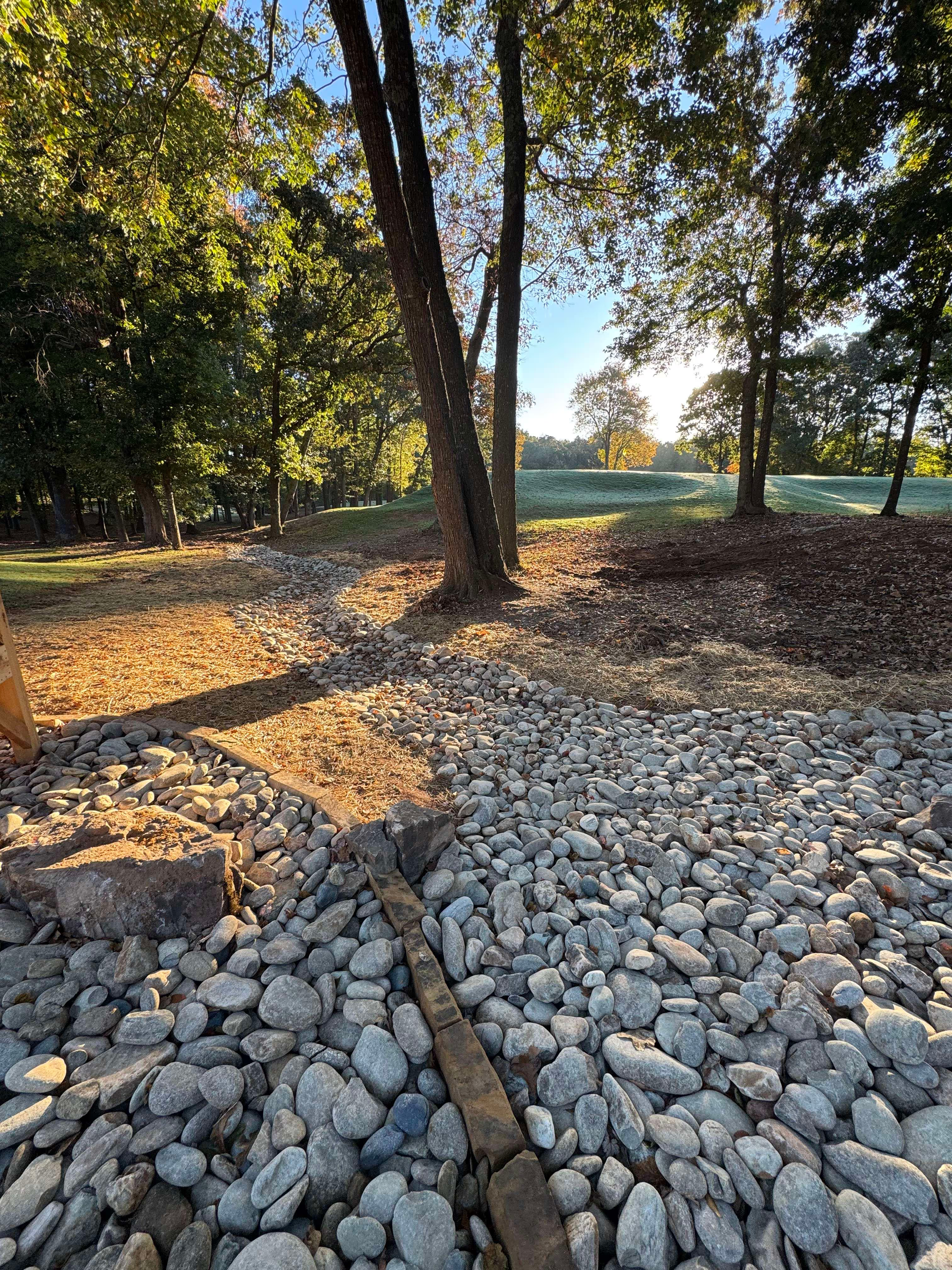
What Drainage and Erosion Control Involves
Drainage problems rarely look like drainage problems at first. They look like a soggy corner of the yard that never fully dries out, a muddy slope that loses a little more soil every time it rains, a patio that pools water after every storm, or cracks developing in a foundation that nobody can quite explain. By the time the source of the problem is obvious, the damage has usually been building for years.
Rooted approaches drainage as a site-wide question rather than a spot fix. Where is water coming from, where is it going, and where is it stopping when it should not be are the questions that have to be answered before any solution is designed. French drains, channel drains, catch basins, regrading, erosion control plantings, and retaining structures are all tools that solve different parts of a drainage problem, and the right combination depends entirely on the specific conditions of your property. Rooted assesses the full picture before recommending any of them.
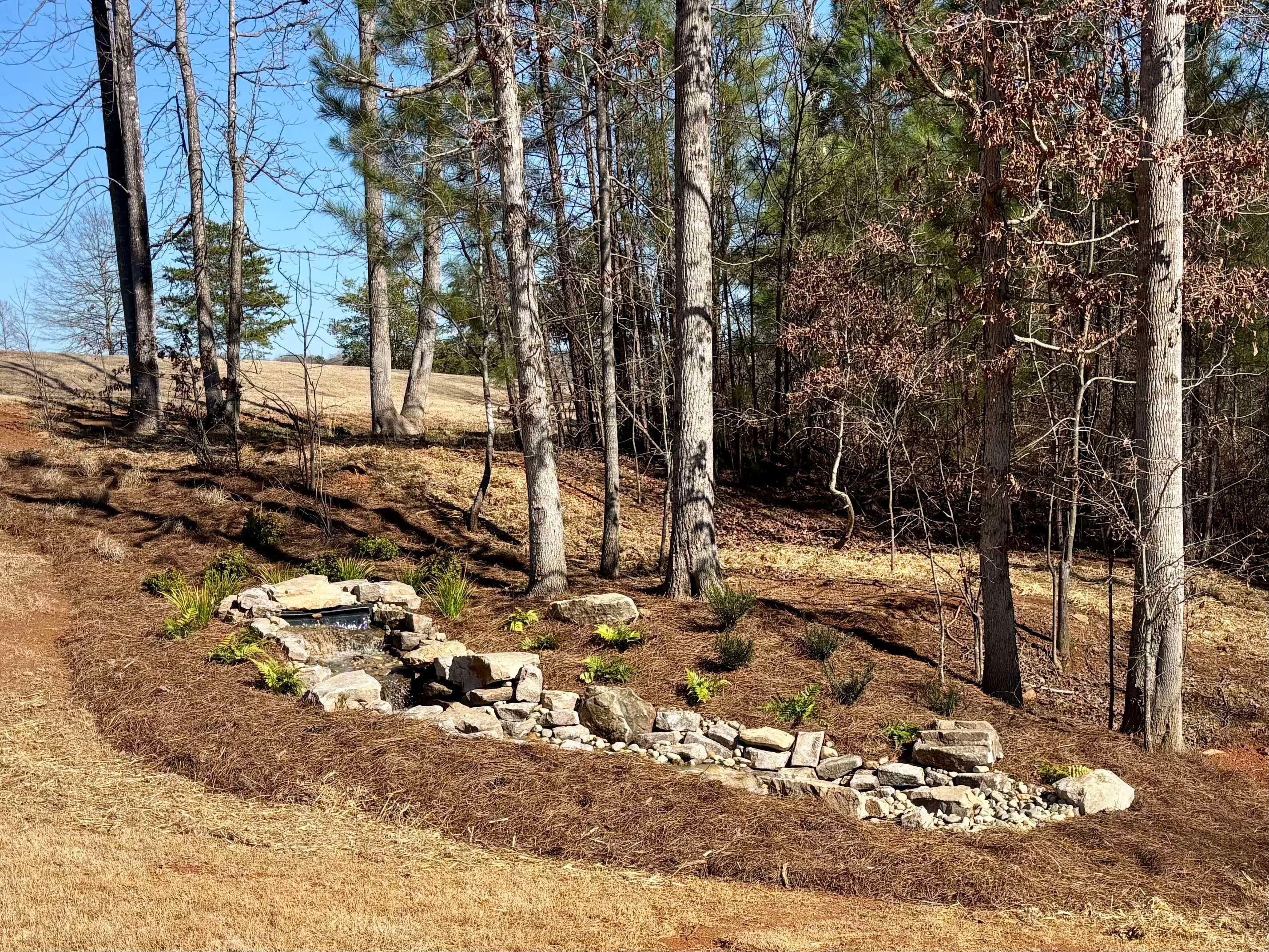
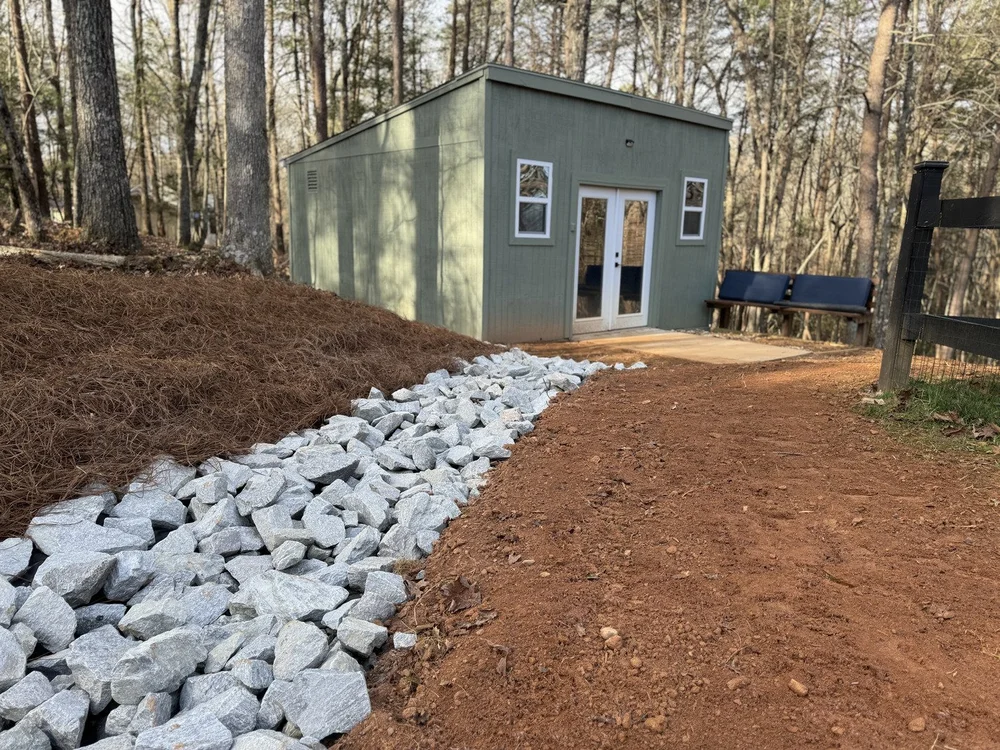
An Informational Guide to Drainage and Erosion Control
Drainage is one of the most misdiagnosed categories in outdoor improvement. Understanding how different solutions work and what problems they actually solve helps you avoid spending money on fixes that address the symptom rather than the source.
French drains move subsurface water. A French drain is a perforated pipe set in a gravel-filled trench that collects groundwater and subsurface runoff and redirects it to a discharge point away from the problem area. It works well for yards that stay soggy after rain due to a high water table or poor soil drainage. It does not solve surface runoff problems on its own because surface water has to infiltrate the soil before the French drain can collect it.
Channel drains and catch basins handle surface water. Where water moves across a hard surface like a driveway, patio, or compacted lawn area and has nowhere to go, a channel drain or catch basin intercepts it at the surface and moves it through an underground pipe to a discharge point. These are the right tool for surface pooling problems that French drains are not designed to address.
Regrading solves what drainage structures cannot. Some drainage problems are not pipe problems. They are grade problems. Ground that pitches toward a foundation, slopes that funnel water into a low corner of the yard, or flat areas with no outlet for surface water often need to be reshaped before any other solution will work properly. Drainage structures installed on improperly graded ground will underperform regardless of how well they are built.
Downspout management is often the starting point. A significant percentage of residential drainage problems trace back to roof runoff that is being discharged too close to the foundation or in a location that overwhelms the surrounding ground. Extending downspouts, adding pop-up emitters, or connecting downspouts to an underground drainage system can eliminate or significantly reduce the problem before more extensive work is needed.
Discharge location matters. Every drainage system needs somewhere to send the water it collects. Discharge points need to be located where the water can disperse safely without creating erosion, pooling on a neighbor's property, or violating local stormwater ordinances. Rooted identifies appropriate discharge locations as part of every drainage design.
Fix the Source, Not Just the Symptom
The most common drainage mistake is treating the visible problem as the whole problem. A soggy corner gets a French drain. A muddy slope gets erosion fabric. A pooling patio gets a channel drain. Sometimes those are the right solutions. More often they are partial answers to a larger question about how water is moving across the entire property, and a fix that addresses only part of that picture tends to shift the problem rather than solve it.
Rooted starts every drainage project by mapping how water actually moves across your property before any solution is on the table. Where it enters, where it slows down, where it pools, where it is cutting into soil it should not be touching, and where it needs to end up are all part of the same assessment. The solution that comes out of that process is designed to manage the whole problem, not just the part that is easiest to see from the back door. Water that is properly managed at the source does not find its own way, and everything built on top of that ground performs better and lasts longer because of it.
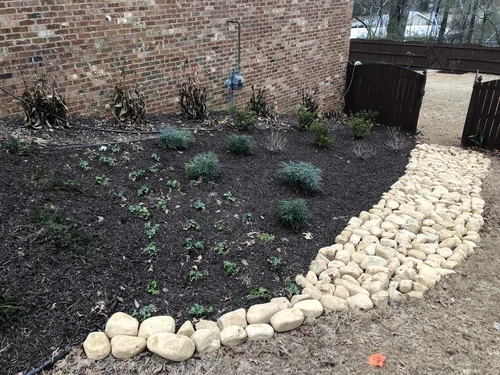
Ready to Transform Your Outdoor Space? Let’s Talk.
Customer Testimonials
Hear from some of our 100+ 5.0 Star Google Reviews!
Anne J.
Jerry and his team where easy to work with. They completed the job ahead of schedule and under budget. The new wall is as attractive as it is practical. Thank you and hopefully we can do another project in future!
Wayne M.
Lynn V.
Kay W.
Reb W.
FAQs
Selection starts with the site conditions: soil type, drainage, sun exposure, and how the space is used. From there we factor in your aesthetic goals, how much maintenance you want to take on long term, and what role each plant or tree needs to play in the overall design. A tree chosen for shade behaves very differently in a plan than one chosen for screening or as a focal point. We make sure the right plant goes in the right place, which is the single biggest factor in whether a planting thrives or struggles after installation.
We install a wide range, including shade and ornamental trees, flowering shrubs, perennials, annuals, ground covers, ornamental grasses, and native species. On the tree side, we work with everything from canopy trees that anchor a property long term to smaller ornamental varieties that add seasonal color and structure at a human scale. If attracting pollinators, creating privacy screening, adding edible plants, or establishing a windbreak is part of the goal, we can design around those needs specifically.
Spring and fall are generally the strongest windows for most plants and trees in North Georgia. Cooler temperatures and more consistent rainfall give roots time to establish before the stress of summer heat or winter cold. That said, timing also depends on the specific plant. We factor in your project timeline and what is going in the ground to schedule installation at the right point in the season for the best outcome.
Soil preparation is not optional if you want plants and trees to establish well. We assess drainage, pH, and composition before anything goes in the ground. In this area, heavy clay soil is common and requires amendment to give roots the structure and drainage they need. Raised beds, organic matter additions, and proper hole preparation all factor in depending on what is being planted and where. Skipping this step is one of the main reasons new plantings underperform.
We provide care instructions specific to what was installed, covering watering schedules, fertilization timing, and pruning guidance. The first growing season is the most critical period for establishment, particularly for trees, which need consistent moisture while their root systems are expanding. Once established, the maintenance picture changes significantly and most well-chosen plants and trees require far less intervention. If something is not performing as expected after installation, we assess and address it rather than leaving you to figure it out on your own.
The Rooted Process
Every project is different, but our process is consistent. Here is exactly what to expect, from your first call to the day you enjoy your finished space.
.avif)
Consultation
We Come to You
Before anything is designed or priced, we walk the property with you. We look at the site conditions, talk through what is not working, and listen to how you want the finished space to look and feel. Everything that shapes the design starts here.
Design & Proposal
See It Before We Start
Using what we gathered on site, we put together a written proposal with a clear scope, materials, and cost specific to your project. For more complex installs, this includes a 3-D rendering so you can see the finished space before we break ground. Everything is agreed upon before any work begins.
comp.jpg)
Site Prep, Build, & Installation
The Work that Makes it Last
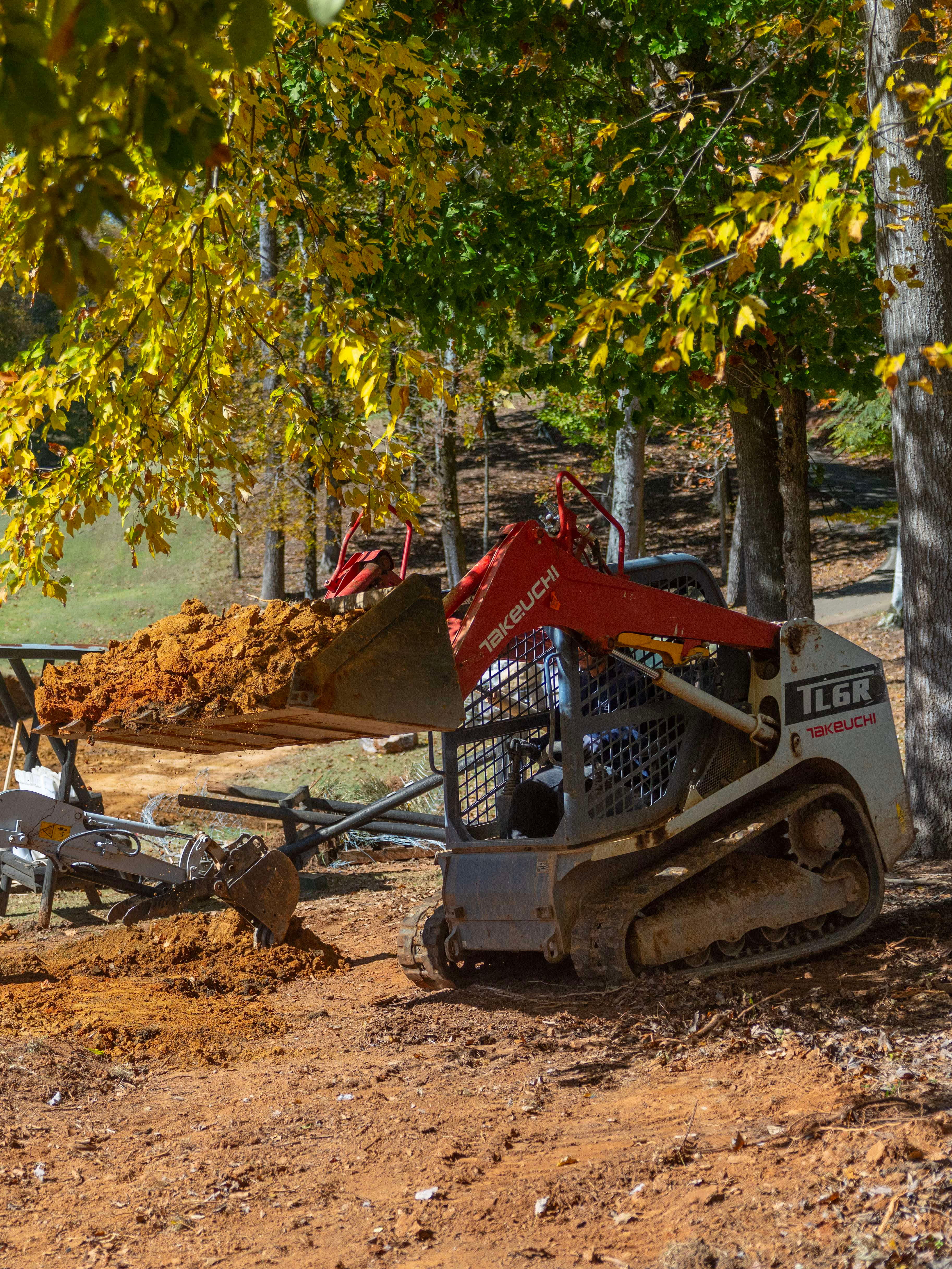
With the design approved and every detail documented, we get to work. Whether that is hardscape construction, planting, drainage, lighting, or a combination of all of them, the installation follows the plan precisely so the finished result matches what you approved.
Final Walkthrough
We Don’t Leave Until You Love It
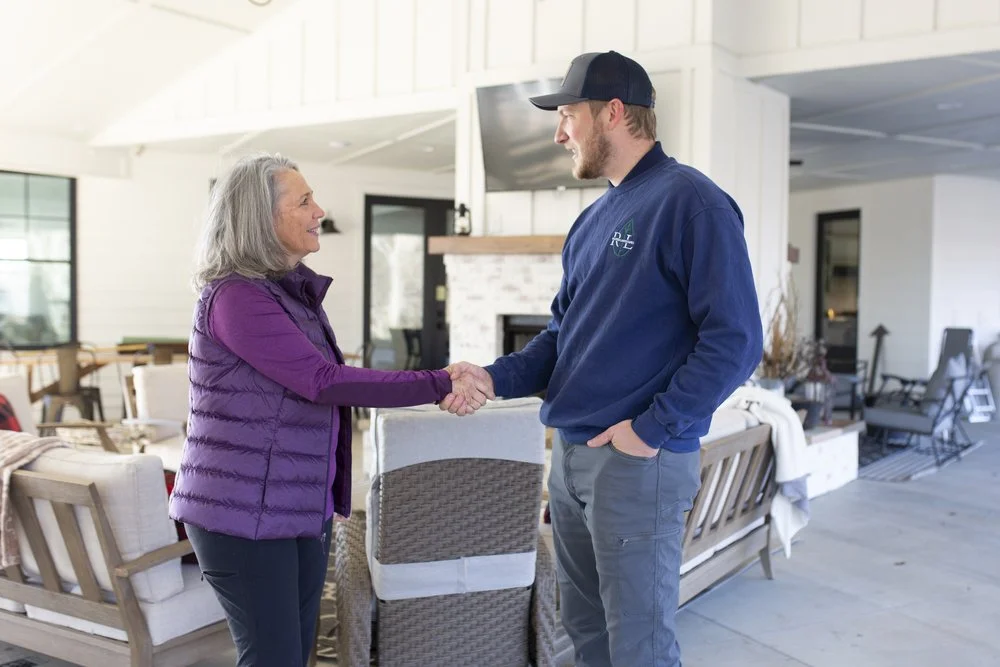
Once the project is complete, we walk it with you. We cover what was built, how it was done, and what to expect from it over time. You leave the walkthrough confident in what you have and clear on how to care for it going forward.
Let's Build SomethingYou’ll Love
Share your vision and we'll handle the rest.