North Georgia Landscape Lighting Ideas for Every Yard
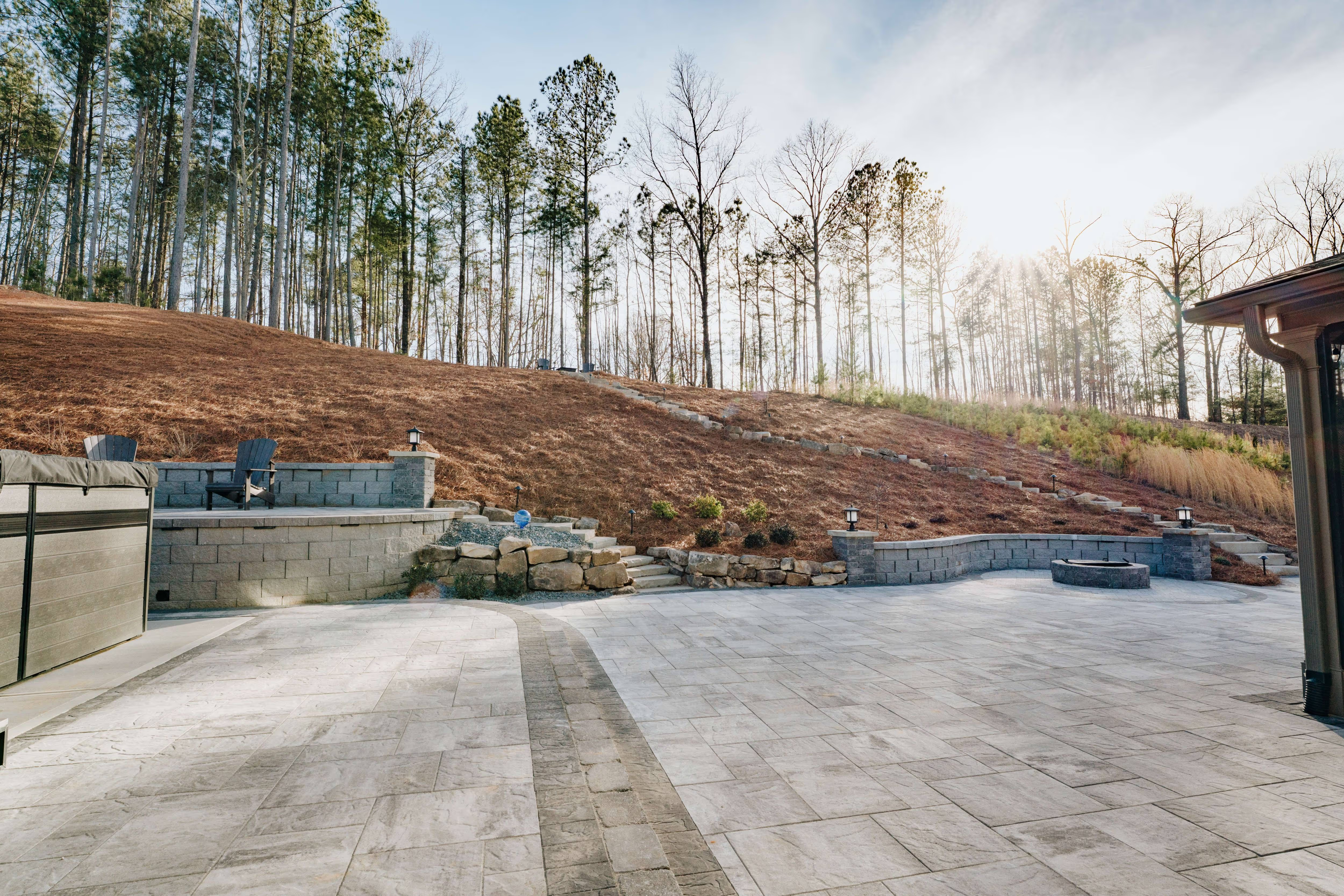
A North Georgia yard feels inviting at sunset, but it can be hard to get around once wooded areas, slopes, and stone steps fade into darkness. With the right landscape lighting, you can make your yard safer, highlight its best features, and enjoy your outdoor spaces even after the sun goes down.
A good lighting design uses a mix of front yard lighting, step lighting, in-ground lighting, and dark-sky-friendly options without making your yard too bright. The tips below will help you plan where to put fixtures, pick sturdy equipment, control glare, and build your system step by step.
Start With a Lighting Plan for Your Yard
Outdoor lighting should first make your yard safer and easier to use, before adding decoration. Start by lighting walkways, entrances, patios, driveway edges, and making sure you can see what’s happening near your home.
Take a walk around your yard at night with a flashlight. Look for stairs, changes in ground level, gates, retaining walls, driveway edges, and paths between your house and outdoor spaces. Also, note any special trees, architectural features, or gathering spots that could stand out with lighting.
Don’t light everything the same way. Make your front door lighting the brightest spot, then add softer lights for driveway lighting, main landscape features, and gentle path lighting or walkway lighting over paths or patios.
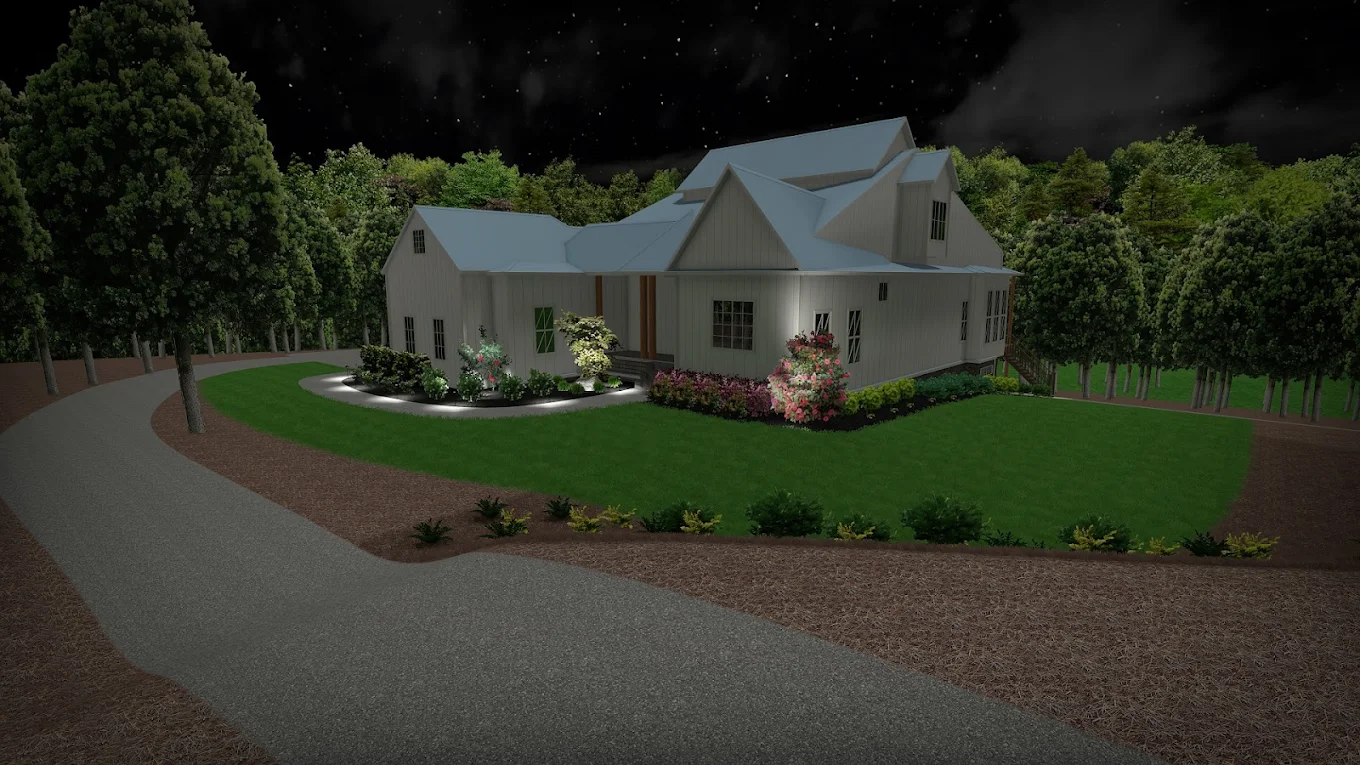
At Rooted Landscape Management, we take planning a step further by using advanced 3D software to design and visualize your home’s lighting plan before installation. With this technology, you can preview how different lighting effects like accent lighting for trees, ambient lighting for patios, or safe walkway lighting will look on your property, ensuring the final result matches your vision.
Account for North Georgia Site Conditions
North Georgia has rolling hills, ridges, creek valleys, mountain views, and forested areas. Many homes also have stonework, deep rooflines, and covered porches. Lighting fixtures need to handle humid summers, heavy rain, falling leaves, and changing plants year-round.
Don’t aim lights at your neighbors’ windows or into thick plants that will block the light. Think about how shrubs and trees will grow over time. The University of Georgia’s landscape planning resources can help you plan for plant size and placement.
Use the Three Lighting Layers
A layered lighting design uses three types of light: ambient for overall comfort, task lighting for things like walking or cooking, and accent lighting to highlight features like columns, trees, or chimneys.
Keep these layers subtle. A few well-placed lights add more depth and make it easier to see at night than lighting everything the same way.
Light Walkways, Steps, and Driveways Safely
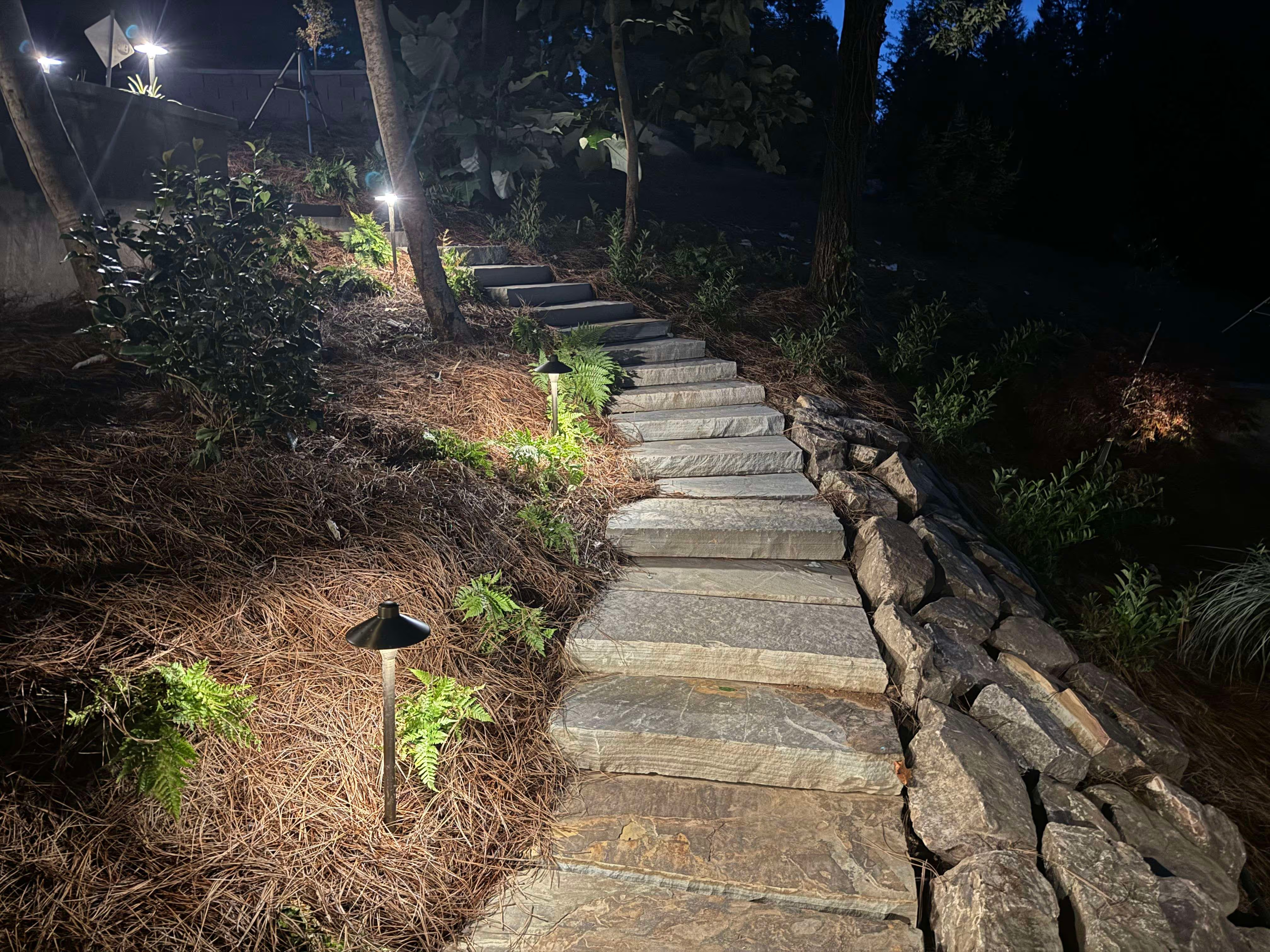
Focus first on lighting paths, stairs, and changes in ground level, since these are hard to see after dark. Use shielded garden lights, step lights, or low-output well lights to light up walkways without shining light into people’s eyes.
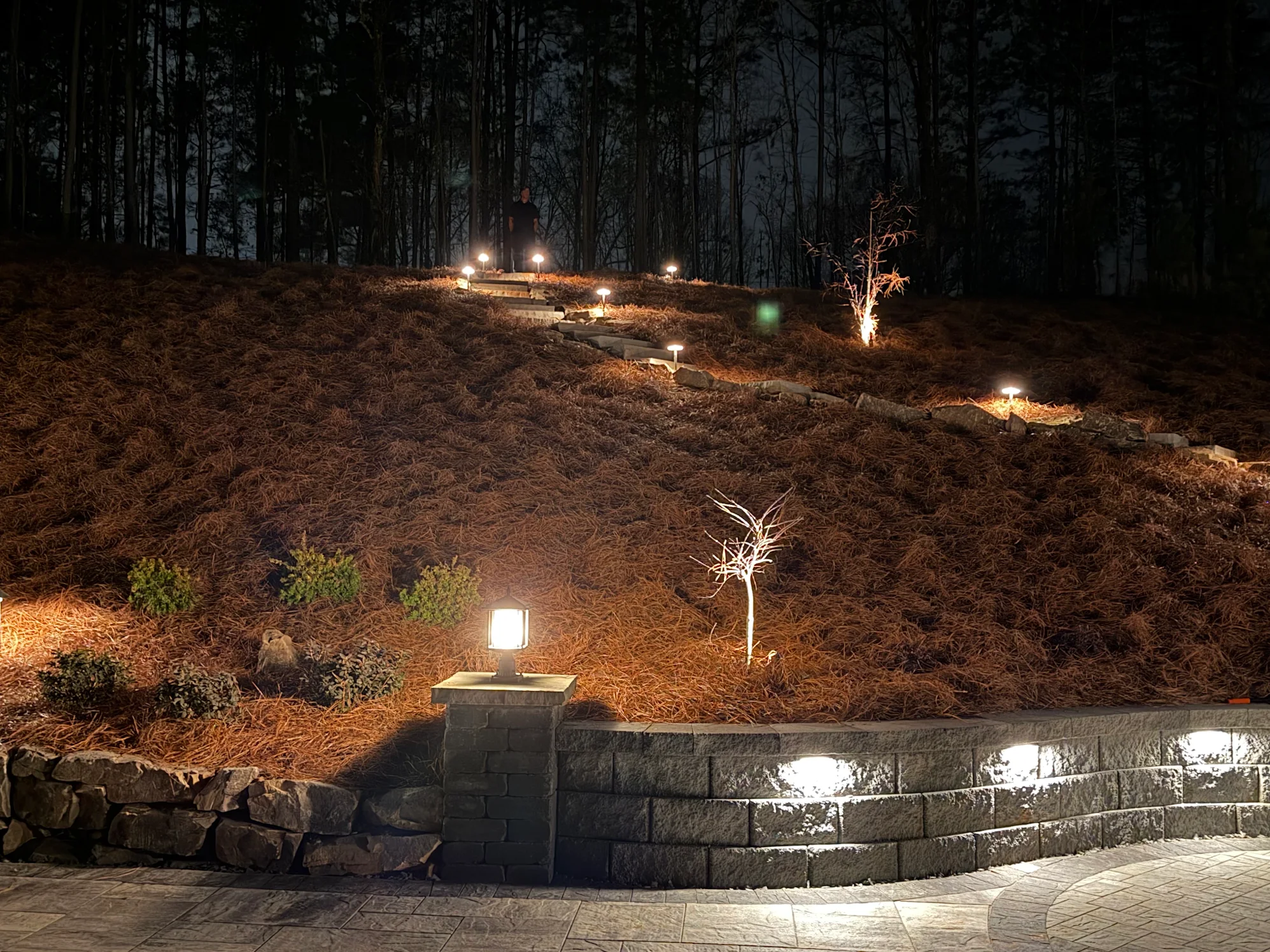
Path lights should guide people along the walkway, not just line up in a straight row. Place them at curves, intersections, steps, where patios meet lawns, along retaining walls, and in narrow spots next to driveways.
For most homes, choose lights with a color temperature between 2700K and 3000K for a warm, comfortable feel. Shield your lights to avoid harsh glare, since too much brightness can actually make it harder to see at night.
Choose Path and Step Fixtures
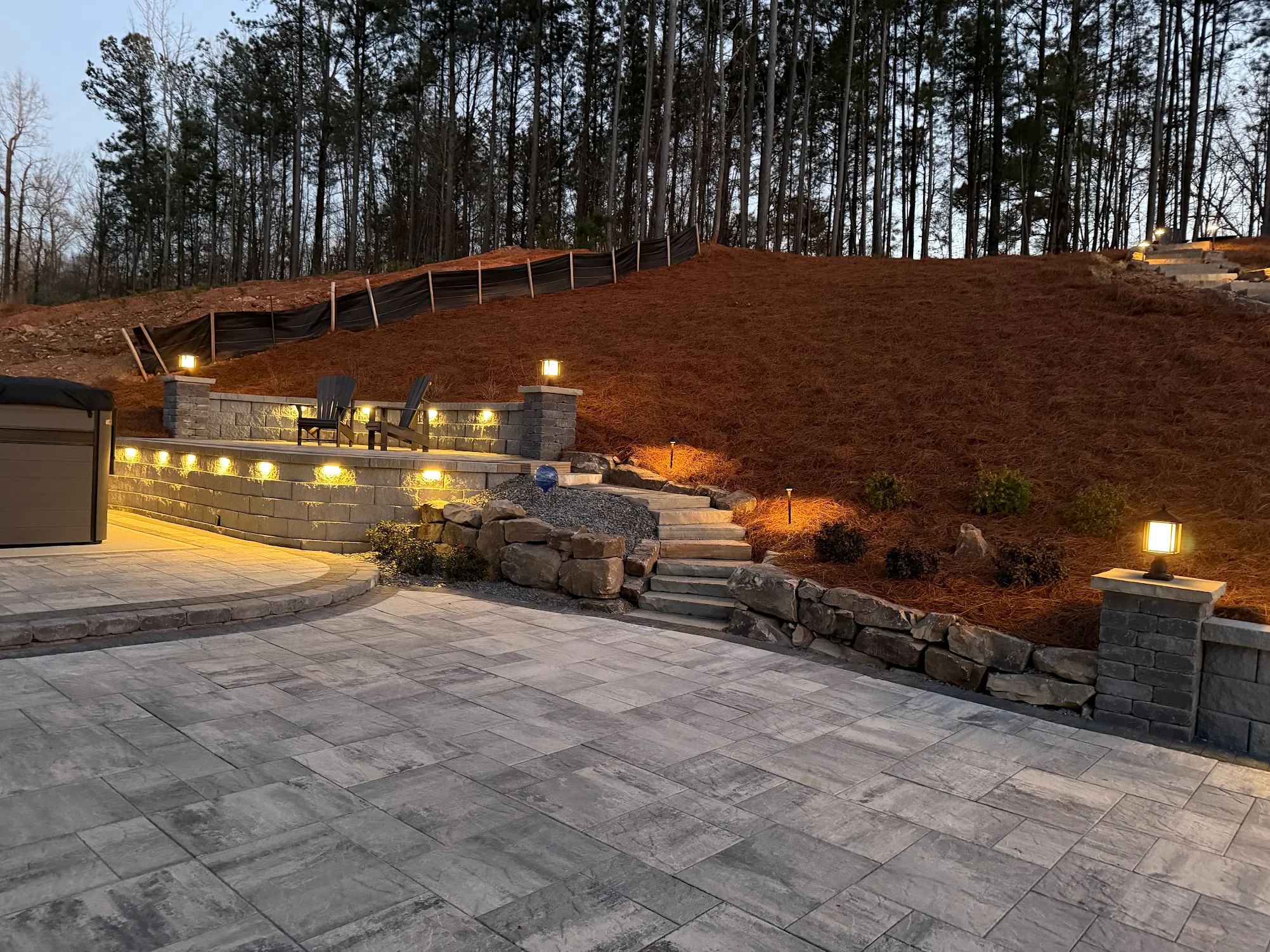
Mushroom-style path lights work well for lighting planting beds and walkways. Bollard lights are good for wider or modern paths. Use recessed step lights for stairs, and hardscape lights under wall caps or built into masonry.
In-ground lights can mark driveway edges or highlight nearby walls, as long as they’re placed away from standing water and where cars drive. Pick fixtures rated for wet locations and built to handle mowers, trimmers, or foot traffic.
Space Fixtures for Guidance, Not Overlighting
There’s no one-size-fits-all spacing for path lights. The right distance depends on the beam spread, path width, curves, plants, fixture height, and how much other light is nearby.
Placing path lights on alternating sides often looks more natural than lining them up in pairs. Try out your layout at night with temporary lights before you set them in place or bury any cables.
Highlight Trees, Stone, and Architecture
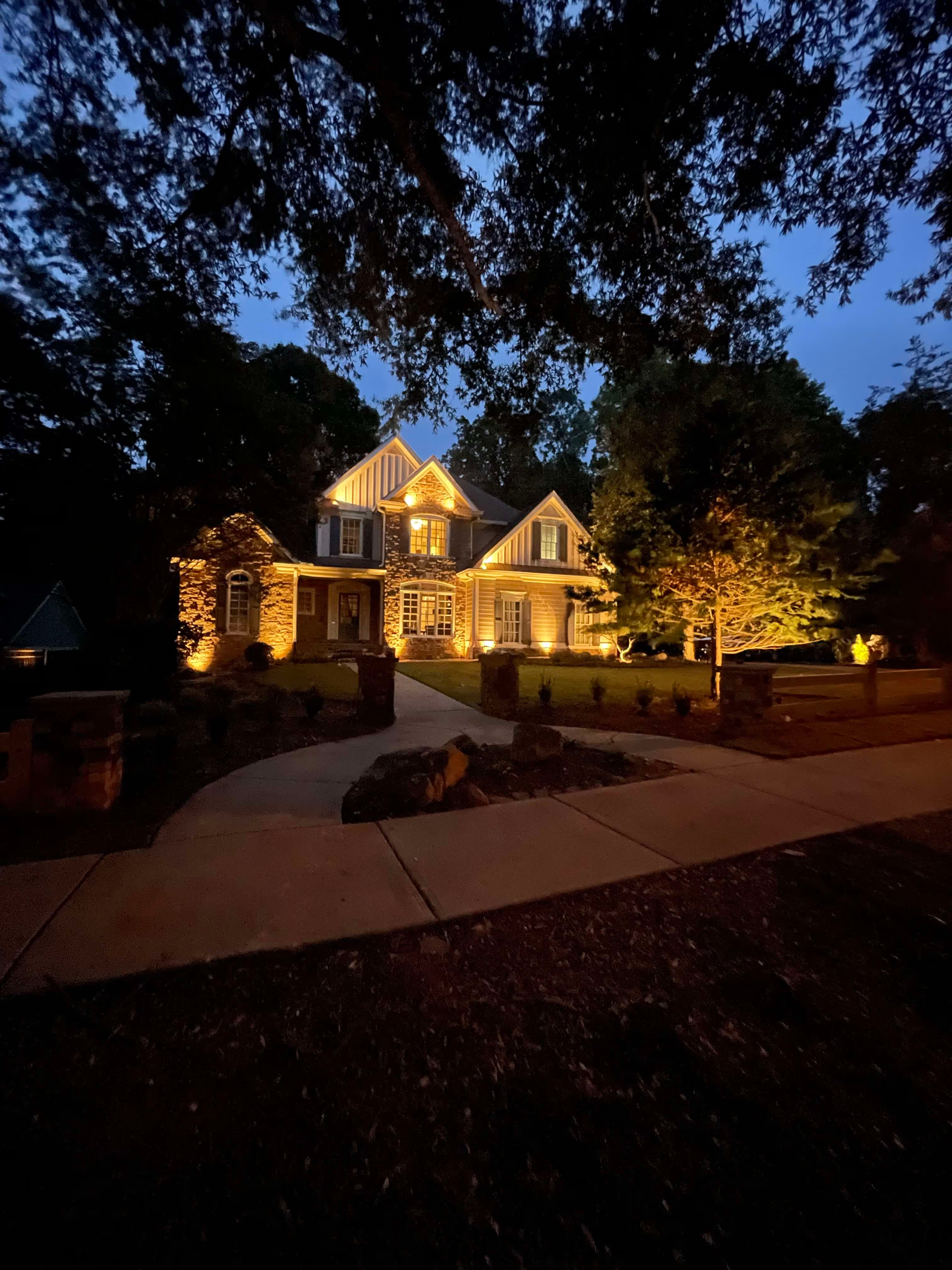
Many North Georgia yards have big hardwood trees, evergreens, stone walls, brick foundations, and porch columns. Highlight vertical features and unique architectural elements with uplighting, spotlights, and light grazing to show off these features while keeping some shadows and depth.
Light grazing means putting a fixture close to a textured surface so the light shines across it at a sharp angle. This highlights the rough surface of stone, brick, wood, or siding.
Use accent lighting only on your yard’s best features, not every plant. Lighting up one oak tree, chimney, or stone wall can make a bigger impact than trying to highlight everything at once.
Uplight Mature Trees With Care
Put spotlights just beyond where the tree roots flare out, not right against the trunk. Aim the light through the main branches, and use shields to keep light from shining into windows or up into the sky.
Choose the beam angle based on the shape of the tree. Use wide beams for trees with spreading branches, and narrow beams for tall trunks or upright evergreens. This keeps the light focused and avoids lighting up the whole yard.
Create Moonlighting From Above
Moonlighting or downlighting means placing lights high up in strong trees or on structures to cast soft, downward shadows through the branches. This looks great over patios, natural paths, and open lawns, where the leaves can create gentle, moving patterns.
If you mount lights in trees, make sure to manage cables carefully and leave room for the tree to grow. Hire a professional for any work that involves heights, attaching equipment to trees, or working near overhead wires.
Make Patios, Decks, and Fire Features More Usable
Patio and deck lighting should make it easy to move around, eat, and spend time together, but avoid putting bright lights at eye level. Use low-output step lighting around steps, seating areas, cooking spots, and where the patio meets the lawn. Add LED lighting for energy efficiency and a modern look.
Deck lighting can use recessed stair lights, rail lights, post-cap lights, or strips under the edges to show where the deck ends. Try to hide the light source so people see the lit surface, not the bulb itself.
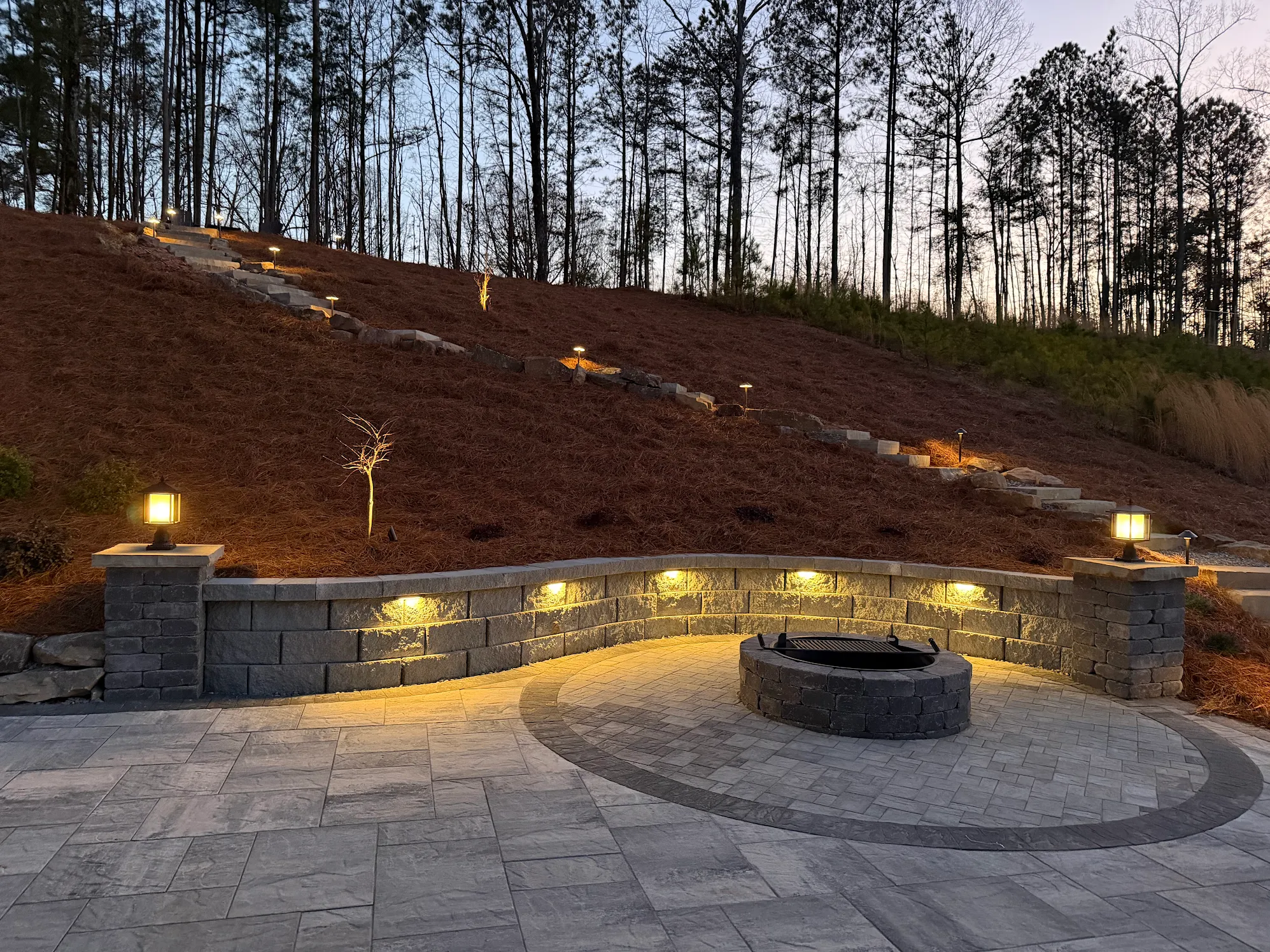
Fire pit lighting needs balance, since the fire is already a main feature. Supplement with low-output ambient lighting and accent lights around seating areas to create a warm, inviting atmosphere. Add separate, code-approved lights along the path, steps, and seating area so people can move safely without relying on the fire’s light.
Add Warm Ambient Light to Outdoor Rooms
Wall sconces, pendant lights, and well-placed string lights can add a warm glow under covered porches, pergolas, or pavilions. Consider adding deck lighting or hardscape lights on steps and retaining walls for safety and ambiance. Choose fixtures that fit the size and style of your home.
Lights with a color temperature between 2700K and 3000K usually give a warm, cozy look. Keeping the same color temperature for your main lights helps your yard look even and inviting.
Use Color and Smart Controls Sparingly
Use color-changing LED lights for special events or holidays, not for everyday lighting. Stick with warm white for regular use, like lighting paths, dining areas, and highlighting your home’s features.
Smart lighting controls and motion sensors let you set up different scenes for daily use, parties, or late-night security. You can dim or schedule lights, set up an astronomical timer, or trigger lights to turn on when someone approaches, giving you flexibility and peace of mind without adding more fixtures.
Choose Fixtures and Controls That Last
Most homeowners use low-voltage lighting because it works well with energy-saving LED fixtures, is easy to place, and can be expanded later. LEDs also use much less energy than old-style bulbs, according to the U.S. Department of Energy. Solar lighting is a popular supplement for decorative areas, but for reliable performance in main areas, stick with wired systems.
Humid conditions, irrigation, and wet soil can damage cheap fixtures. Brass, copper, and good powder-coated aluminum lights usually last longer and resist rust better than thin, unprotected metals.
Add up the wattage of every fixture before selecting a transformer. Leave reasonable capacity for voltage loss, design changes, and future additions rather than operating the transformer at its maximum rating.
Select the Right Light Output and Color
Pick lights based on brightness (lumens), beam angle, shielding, and color temperature—not just wattage. Brighter isn’t always better, especially near paths, seating, or windows. Choose fixtures with a wet-location rating for areas exposed to rain, sprinklers, or humidity.
Keep the color temperature the same for your main landscape lights. Even small differences can stand out when two lights shine on the same wall, tree, or garden bed.
Add Automation and Security Features
An astronomical timer automatically adjusts your lighting schedule based on local sunset and sunrise, so you don’t have to keep reprogramming it. Motion sensors can add light around side yards, service doors, garages, and driveways when needed. Floodlights are ideal for wide coverage in driveways and large areas, while well lights and in-ground lighting can be used to subtly mark edges and highlight features at ground level.
consistent acrossLighting helps you see better and can deter unwanted visitors, but it’s not a substitute for locks, cameras, gates, or a full security plan. Place security lights so they don’t shine into drivers’ or neighbors’ eyes.
Avoid Common Landscape Lighting Mistakes
Too much lighting is a common mistake. Exposed bulbs, overly bright lights, poor aiming, and too many fixtures can make your yard look flat and cause glare.
Don’t aim lights at windows, roads, neighbors’ yards, or seating areas. Cool blue-white lights can look harsh on brick, wood, or stone unless your home has a modern style.
Think about drainage, sprinkler heads, falling leaves, lawn care, and plant growth when planning your lighting. Fixtures that work in winter might get blocked when shrubs or perennials grow in the summer.
Prevent Glare and Light Trespass
Use glare shields, louvers, lower-brightness bulbs, and careful aiming to keep light where you want it. Check how your lighting looks from inside your house, your neighbors’ view, and the street before finishing the setup.
Dark-sky-friendly lighting points light down and avoids shining it above the horizon. The DarkSky Approved program offers more tips on choosing fixtures that reduce glare and light pollution
Do Not Treat Solar Lights as a Full System
Solar lights work well for decorative beds or as markers where the panels get plenty of sun. They may not perform as well in wooded areas, under thick trees, on cloudy days, or during short winter days.
Low-voltage or hardwired lights are usually more reliable for main safety and architectural lighting. Use solar lights only in places where it’s okay if the light is dim or goes out, so you don’t create a tripping hazard.
Install, Test, and Maintain the System
Begin by testing your lighting at night with temporary fixtures, extension cords, or handheld lights. Check how everything looks from walkways, outdoor seating, inside your house, and from the street before you bury cables or set fixture angles. Protect low-voltage cable where it crosses lawn edges, planting work areas, or routes exposed to digging. Line-voltage circuits, outdoor receptacles, and transformer connections must follow applicable electrical codes and local requirements.
Check your lighting system every season. Clean the lenses, clear away leaves, tighten loose parts, straighten fixtures, trim plants that block the light, and check whether erosion or freezing has moved anything.
Know When to Hire a Professional
Hire a qualified landscape lighting pro or licensed electrician for line-voltage wiring, complex transformer setups, tree-mounted lights, or any work that needs to meet code. It’s also smart to get help for steep yards or big properties with lots of cables.
Before you sign off on a design, ask for a nighttime demo, fixture details, control information, warranty terms, and a maintenance plan. This helps you know what to expect and how your system will be cared for. Installing your lighting in phases helps control costs and lets you see how the design works before adding more. Start with lights for the front entry, main walkways, stairs, driveway edges, and big changes in ground level.
In the second phase, add uplighting for trees, patio lights, deck fixtures, and accents for stonework or architecture. Save garden lighting for last, after you know the main safety and walkway lights work well all year.
Use this final checklist before approving the plan:
- Confirm that primary walking routes, stairs, and entrances are visible.
- Keep bare light sources out of normal sightlines.
- Use warm, consistent color temperatures across connected spaces.
- Aim every fixture to control glare and spill light.
- Choose reliable timers, sensors, or smart controls.
- Leave access for cleaning, adjustment, and future repairs.
- Recheck fixture positions as plants grow and landscapes change.
Frequently Asked Questions
What Are the Current Trends in Landscape Lighting?
People now prefer warm LED lights, layered lighting, hidden fixtures, smart timers, and better glare control. Designers focus on lighting a few trees or architectural features instead of making the whole yard super bright.
What Are Some Creative Ideas for Lighting My Outdoor Landscape?
Try adding moonlighting from tall trees, lighting across a stone wall, putting lights under the edge of a retaining wall, or using subtle lights on deck steps. Uplighting one or two special trees can add depth without making things look crowded.
What Are Common Outdoor Lighting Mistakes?
Common mistakes are using lights that are too bright, leaving bulbs exposed, mixing different color temperatures, aiming lights poorly, and not planning for plant growth. Relying on solar lights for important steps and walkways can also make your lighting less reliable.
What Are the Trends for Outdoor Lighting in 2026?
In 2026, outdoor lighting trends will focus on warm, low-glare LED lights, app controls, efficient low-voltage systems, and lights placed to protect the night sky. Flexible lighting scenes will let you use the same system for daily use, parties, and security.
A good lighting plan for North Georgia helps you see hazards while keeping the natural look of your woods, stonework, and big trees. Begin by lighting safe paths and controlling glare, then add accents that are easy to use and maintain.
Thinking about making changes to your yard? The team at Rooted Landscape Management has helped North Georgia homeowners create beautiful, functional outdoor spaces for years. If you’d like friendly advice or a custom plan for your landscape or hardscape project, contact us for a no-pressure consultation. See what your yard can become, day or night