Key Design Principles for Effective Retaining Walls in Gainesville

Retaining walls play a far more important role in Gainesville landscapes than many people realize. With rolling terrain, variable soils, dense vegetation, and a climate defined by frequent heavy rains, retaining walls are often essential structural elements rather than optional landscape accents. When designed correctly, they stabilize slopes, manage elevation changes, control erosion, and create usable outdoor space. When poorly designed, they can fail dramatically, damaging property and posing safety risks. Understanding the core design principles behind effective retaining walls is the difference between a long-lasting asset and an expensive problem.
In Gainesville, retaining walls must contend with more than just soil weight. High rainfall, fluctuating groundwater, and pockets of clay and sand create conditions where hydrostatic pressure and soil movement become major design drivers. That is why thoughtful planning, site analysis, and engineering fundamentals matter just as much as material choice or appearance.
Common Retaining Wall Systems in Gainesville
Retaining walls in this area are commonly built as gravity walls, cantilevered concrete walls, anchored systems, segmental retaining walls, or lower timber landscape walls. Each type resists soil pressure differently, and each is appropriate in certain situations. Segmental systems are often used for residential terraces and sloped yards, reinforced concrete walls for taller or space-restricted sites, and timber walls for low decorative features where permitted. The key is matching the wall type to the site conditions, wall height, loading, and long-term expectations rather than forcing a preferred material onto an unsuitable site.
Local regulations also shape retaining wall design. In Gainesville and Alachua County, permits are typically required when walls exceed certain heights, support structures or driveways are present, or the structure is near property lines or public areas. Many walls require engineered plans and inspections, not just for compliance but for safety and liability protection. Code requirements exist because poorly designed walls are a known hazard, especially in areas with heavy rainfall like Gainesville.
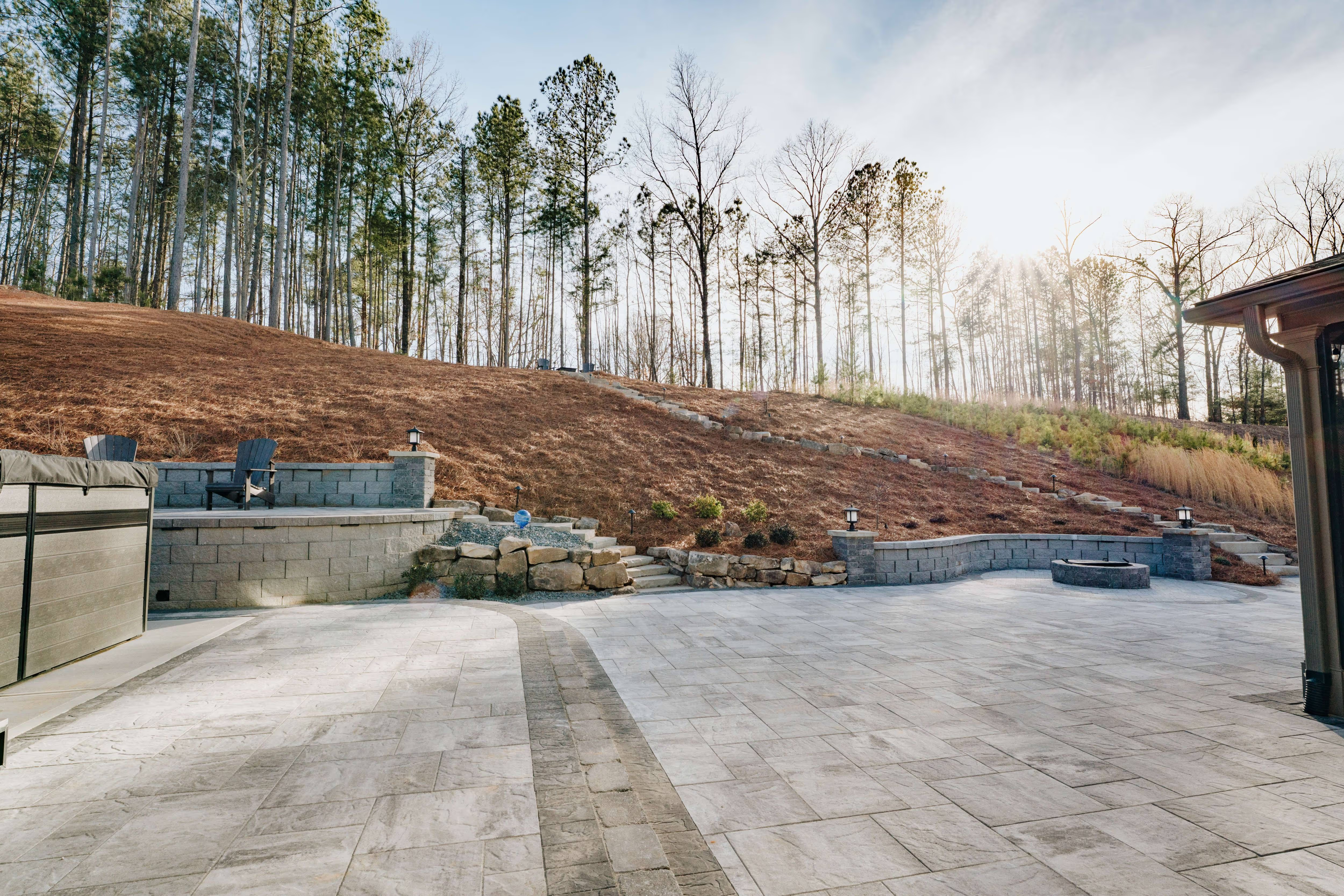
Around local homes and businesses, retaining walls are used to stabilize sloped yards, create level patios and pool decks, support driveways, manage elevation changes in parking areas, and control erosion along drainage swales. Real estate trends also drive demand, as homeowners look to maximize outdoor living space on challenging lots. A well-designed retaining wall can significantly increase property usability, curb appeal, and value, while a failing wall does exactly the opposite.
Environmental and Site Challenges
One of the biggest challenges in Gainesville is dealing with variable soil and water conditions. Sandy layers, clay pockets, and fluctuating groundwater can exist within the same property. Tree roots, tight lot lines, and existing structures often limit excavation options. Heavy rain events can rapidly saturate soils, dramatically increasing pressure behind walls. Effective retaining wall design anticipates these challenges rather than reacting to them after construction.
Every successful retaining wall starts with a thorough site assessment. This includes evaluating slope geometry, elevation changes, nearby structures, property boundaries, vegetation, drainage paths, and construction access. Signs of existing instability, such as cracked ground, leaning fences, or previous erosion, must be taken seriously. Accurate measurements, photos, and documentation enable designers to base decisions on real conditions rather than assumptions.
Understanding local soil behavior is critical. Sandy soils drain well but can shift if not compacted properly. Clay soils retain water and exert higher pressures when saturated. Loamy soils fall somewhere in between but still require careful handling. For taller or critical walls, soil testing or geotechnical input provides valuable data on bearing capacity, shear strength, and drainage characteristics. In Gainesville’s mixed subsurface conditions, assuming uniform soil behavior is a common and costly mistake.
Slope and loading must also be evaluated carefully. Cutting into a slope creates different forces than building a wall to support fill. Surcharge loads from driveways, vehicles, fences, or structures near the top of the wall significantly increase lateral pressure. Utilities, tree protection zones, and nearby foundations often dictate where walls can be placed and how deep excavation can go. These constraints shape what is feasible long before materials are selected.
Drainage patterns deserve special attention. Water is the single greatest threat to retaining wall performance in Gainesville. Observing how water moves across a site during heavy rain reveals where pressure will build behind a wall. Roof runoff, uphill properties, and paved surfaces can all contribute to excessive water loading if not managed as part of the overall design. These walls cannot be treated as isolated features; they must work within a coordinated drainage plan.
Structural Design Fundamentals
From a structural standpoint, lateral earth pressure is the primary force retaining walls must resist. Soil type, moisture content, backfill material, and surcharge loads all influence how much pressure a wall experiences. Stability against overturning and sliding is achieved through wall weight, footing geometry, base friction, and sometimes key footings or reinforcement. When these checks are overlooked, walls tend to tilt, crack, or move forward, especially after heavy rain saturates the soil.
Bearing capacity beneath the wall is equally important. If the soil cannot support the wall load, uneven settlement and structural distress follow. In Gainesville, where subsurface conditions vary widely, bearing capacity should be evaluated rather than assumed. Solutions may include wider footings, soil improvement, or selecting a different wall system better suited to the conditions.
Reinforcement plays a major role in many retaining walls. Steel reinforcement strengthens concrete walls, while geogrid reinforces segmental systems by creating a reinforced soil mass behind the wall. Reinforcement is commonly required for taller walls, walls supporting driveways, or walls subjected to significant surcharge loads. Proper coordination between engineers and installers ensures reinforcement is placed correctly and performs as intended.
Drainage design deserves its own emphasis because even the strongest wall can fail if water is allowed to build up behind it. Perforated drain pipes, gravel backfill, drainage blankets, and weep paths relieve hydrostatic pressure and direct water safely away. Surface drainage is just as important, with swales, grading, and roof runoff controls reducing the amount of water entering the retained soil. In Gainesville’s climate, drainage is not optional; it is foundational.
Material Selection and Construction Practices
Material selection must balance performance, durability, and appearance. Segmental concrete block walls are popular locally due to their modular design, aesthetic flexibility, and ability to accommodate movement. Cast-in-place concrete walls are ideal for tall or space-constrained sites where rigidity is required. Timber walls may work for low, lightly loaded applications, but have shorter lifespans in humid conditions. Natural stone walls offer visual appeal but still require sound structural design and drainage to perform reliably.
Foundation preparation is one of the most overlooked aspects of retaining wall construction. Unsuitable soils must be removed, bases properly excavated, and crushed stone compacted to provide uniform support. Poor base preparation leads to settlement and alignment issues that no amount of surface repair can fix later. Compaction must be done in thin lifts with appropriate equipment, especially in sandy or mixed soils common to Gainesville.
Backfill selection and placement also affect long-term performance. Clean, free-draining granular material is typically preferred behind walls. Backfill must be placed and compacted in layers, coordinated with reinforcement installation where required. Moisture content must be managed carefully, as overly wet soils compact poorly and create weak zones behind the wall.
Geogrid reinforcement must be installed exactly as designed, with proper orientation, embedment length, and spacing. Each layer transfers load from the wall face into the soil mass, and mistakes are difficult to correct once buried. Inspection and documentation during construction are essential to ensure compliance with the design.
Balancing Aesthetics and Performance
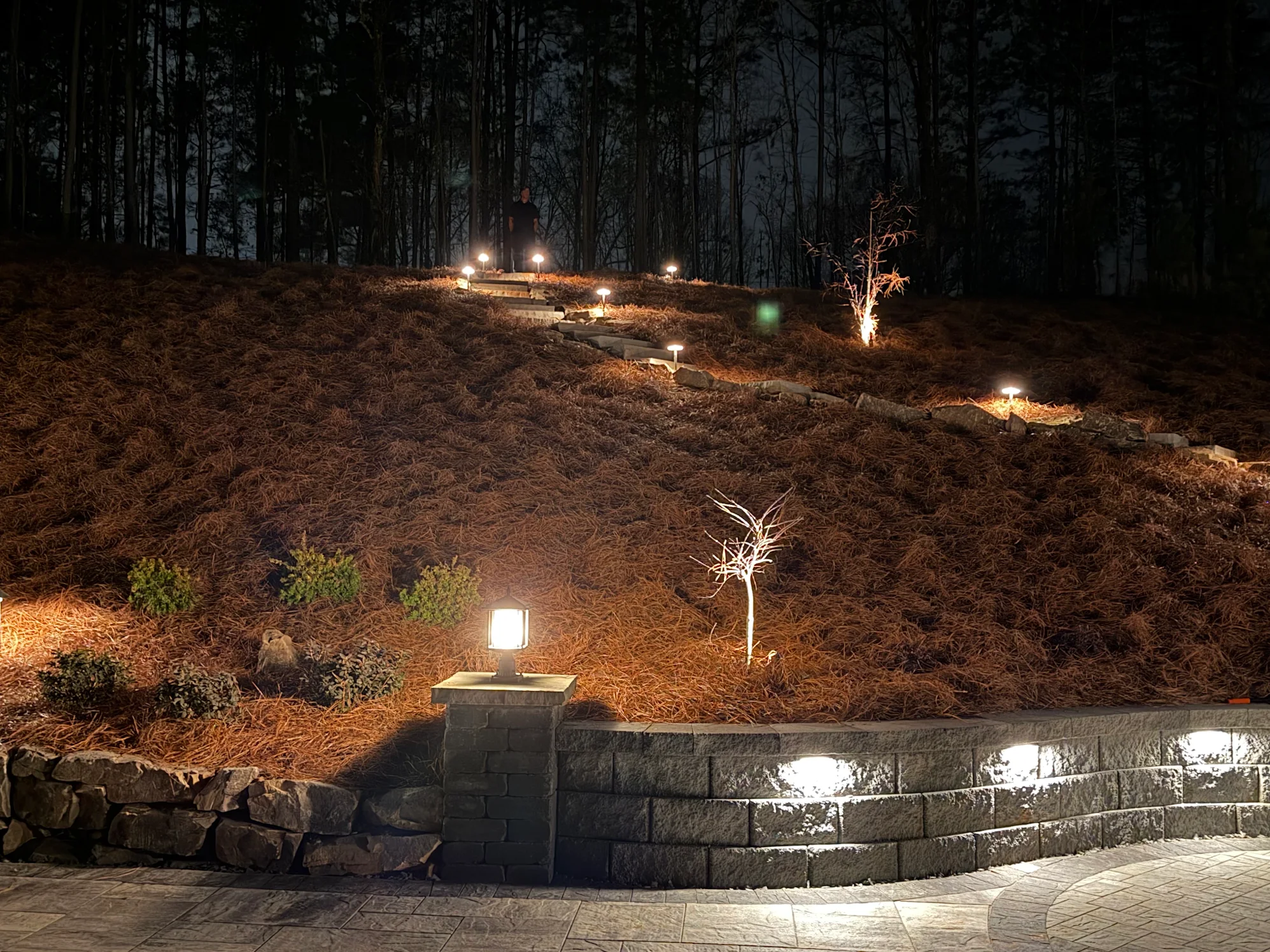
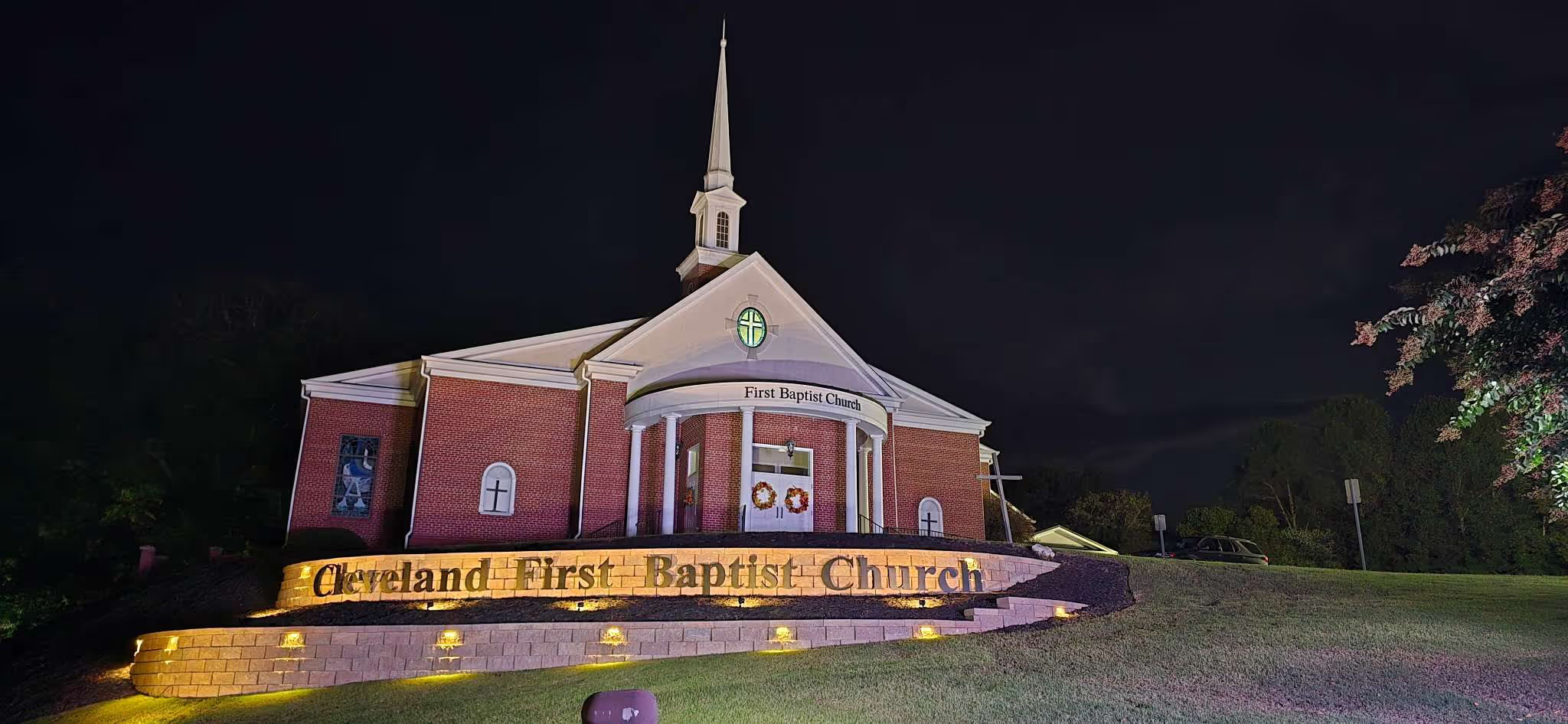
Aesthetics matter, but they must never override structural requirements. Retaining walls can be terraced, curved, planted, and integrated with seating, stairs, and lighting. These features improve usability and appearance, but they must be coordinated with engineering requirements to avoid compromising stability. In Gainesville, successful designs blend visual appeal with resilience against weather and soil conditions.
Construction quality ultimately determines whether a retaining wall performs as intended. Qualified contractors who understand local conditions, codes, and best practices are critical. Proper sequencing, adherence to design, quality control, and job-site safety all contribute to durable results. Shortcuts taken during construction often lead to long-term problems that far outweigh any initial savings.
Even well-built retaining walls require ongoing attention. Periodic inspections, vegetation management, drainage maintenance, and prompt repair of minor issues extend service life. In Gainesville’s rain-heavy climate, proactive maintenance is far less costly than reactive reconstruction.
Effective retaining wall design in Gainesville comes down to understanding the environment, respecting engineering principles, and executing construction with care. When site analysis, structural design, drainage planning, material selection, and workmanship work together, retaining walls become long-term assets that enhance safety, functionality, and property value. Treating them as permanent infrastructure rather than quick fixes leads to walls that perform reliably for decades.
Rooted Landscape Management offers professional hardscaping solutions to Gainesville, Georgia, residents. From hardscape design and installation, retaining walls, and paver installations, to fire pits, our team works together with you to transform your yard. Add privacy and interest and define your outdoor spaces with our professional team. Call us for a free estimate.